Romania's regional bread map: from Transylvanian pâine bătută to Oltenian pâine la țest
A practical orientation to Romanian bread for professional bakers: read any Romanian loaf by four things at once — the grain (wheat/rye/corn), the leaven (drojdie yeast vs maia sourdough), the baking vessel (modern deck, wood-fired hearth on the vatră, the Oltenian țest clay bell, or a griddle), and the region it belongs to. It maps the country's signature loaves — the Oltenian pâine la țest baked under a fired-clay bell (Dacian-rooted, from Latin testum), the Transylvanian pâine bătută whose thick wood-oven crust is beaten to crack it (not charred), the organic-certified Pita de Sântimbru of Alba, the Székely potato bread (pâine cu cartofi) of Ținutul Secuiesc, the Moldovan lipie, and the white franzelă that now dominates the national table — and untangles the vocabulary (pâine, pită, franzelă, lipie, turtă, mălai, mămăligă, azimă, colac). It explains why rye must be acidified and why corn cannot raise a loaf alone, anchors flour and leaven numbers in first-party supplier datasheets, gives illustrative baker's-percentage formulas and fault-finders, and maps every family to ready-to-buy Domson flours, yeasts and sourdoughs (GoodMills, Domson, Agrol, Ireks, Lesaffre, Lallemand/Pakmaya, Zeelandia, Uldo, Malmon/Böcker). Native Romanian-language sources were mined for authentic regional names, methods and history; every regional and numeric claim is cited. Cross-links the Pillar A craft articles and the B4-Romanian sibling dossiers.
Romania's regional bread map: from Transylvanian pâine bătută to Oltenian pâine la țest
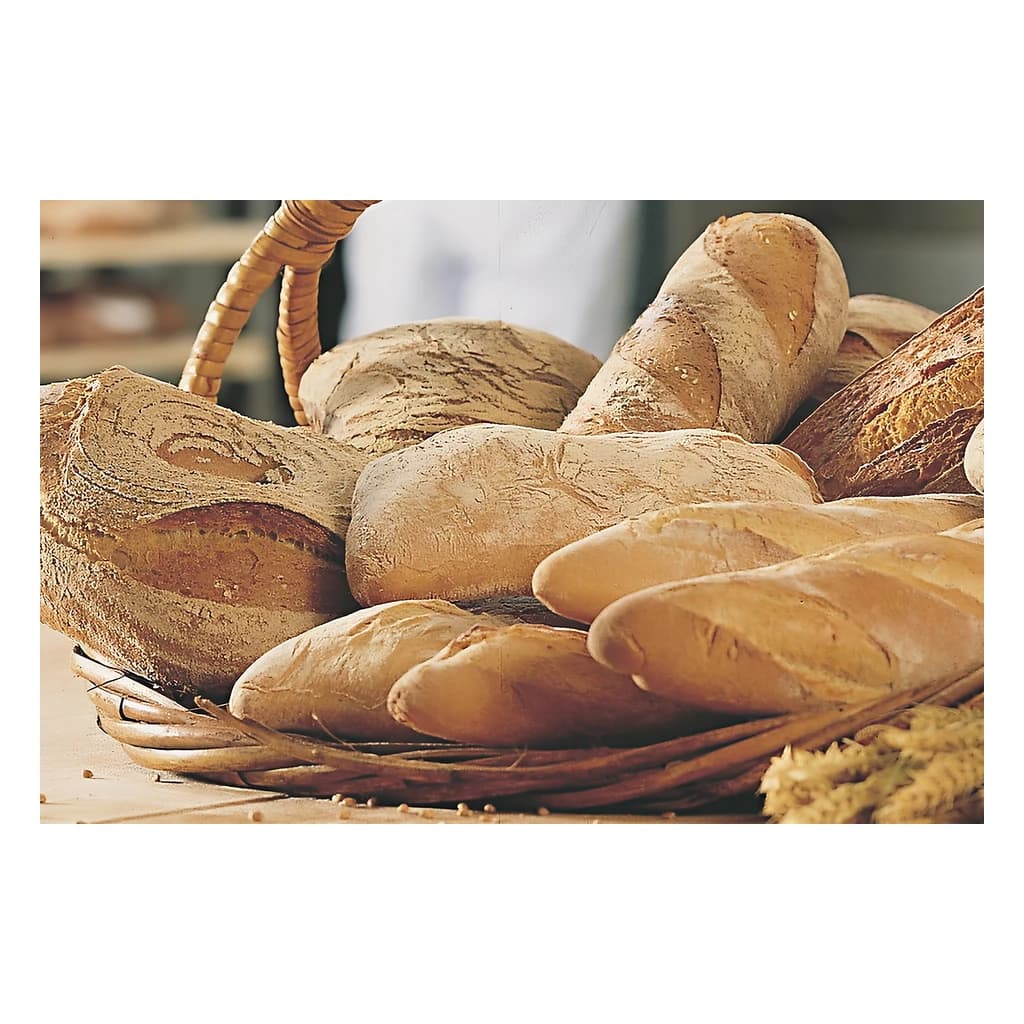
Bread sits at the centre of the Romanian table — pâinea cea de toate zilele, our daily bread — and it is not one thing. It runs from an airy white franzelă (a French-style white wheat loaf) on a Bucharest breakfast table, to a pită (the western regional word for bread) pulled from a village wood-oven, to a flat round baked in Oltenia under an upturned clay bell, to a corn turtă on a hot griddle. For a Romanian customer base, getting this right is the difference between selling "bread" and selling pâinea noastră — our bread. This article is the map: how to read any Romanian loaf by four things at once, where the great regional loaves sit, and how each maps to the order sheet (see img-b4bl-01). Deeper technique lives in the sibling dossiers — B4-maia-and-sourdough-tradition, B4-flour-classification-romanian and B4-cozonac-enriched-dough — but this is where you start.
How to read a Romanian loaf: four questions
Almost every Romanian bread can be placed by answering four questions (see img-b4bl-02 and data.json table-grain-systems and table-vessels):
- Which grain? Wheat (grâu), rye (secară), or corn (mălai / porumb) — and each behaves as a different baking system, covered below.
- Which leaven? Drojdie (baker's yeast) or maia / plămădeală (natural sourdough starter). Traditional country loaves lean on maia; everyday commercial bread leans on yeast [src-380].
- Which vessel? A modern steam deck, a wood-fired hearth oven (cuptor cu lemne pe vatră), the Oltenian țest (clay bell), or a plită (griddle) for flat corn breads. The oven is as much a regional signature as the flour.
- Which region? Historic Romania — Oltenia, Muntenia/Wallachia, Transylvania (Ardeal), the Székely Land, Moldova, Bucovina, Banat, Crișana, Maramureș, Dobrogea — each with its own names and habits.
A word on vocabulary, because the same object changes name across the country (see data.json table-terminology). Pâine is the standard word for leavened bread. Pită means bread too, but is the regional term in Ardeal, Banat, Crișana and Maramureș; it once denoted a corn or mixed-cereal bread, and the word entered Romanian from the South-Slavic/Balkan sphere [src-382, web-regionalisme-pita]. Franzelă is the French-style white loaf — historically a luxury (white, fine) bread, and today the dominant everyday loaf [web-antena3-franzela]. Lipie is a thin flatbread, associated especially with Moldova [web-delumani-paine]. And several "breads" are really something else: turtă is an unleavened flatbread, mălai is both cornmeal and a corn bread made from it, and mămăligă (regionally also called coleșă) is corn porridge, not bread at all [web-wiki-mamaliga]. The ritual loaves — colac, pască, azimă — are their own world, treated in B4-pasca-and-ritual-breads.
Three grains, three baking systems
The single most useful thing to internalise is that Romania's three bread grains are not interchangeable (see img-b4bl-02 and data.json table-grain-systems).
Wheat is the default: its gluten network traps gas, so it kneads, rises and bakes into an airy crumb. The first-party datasheet on the platform's white bread flour (a GoodMills Typ 550-class flour) shows what a good franzelă flour looks like — ash 0.51–0.58 %, wet gluten 28–32 %, gluten index 75–99 and a falling number of ≥ 220 s [ss-wheat550]. The Romanian flour-type numbering (Type 480/550/650/800/1250), fixed by national milling standards [src-377], is its own system, decoded against these codes in B4-flour-classification-romanian and against the wider international schemes in A1-flour-classification-systems.
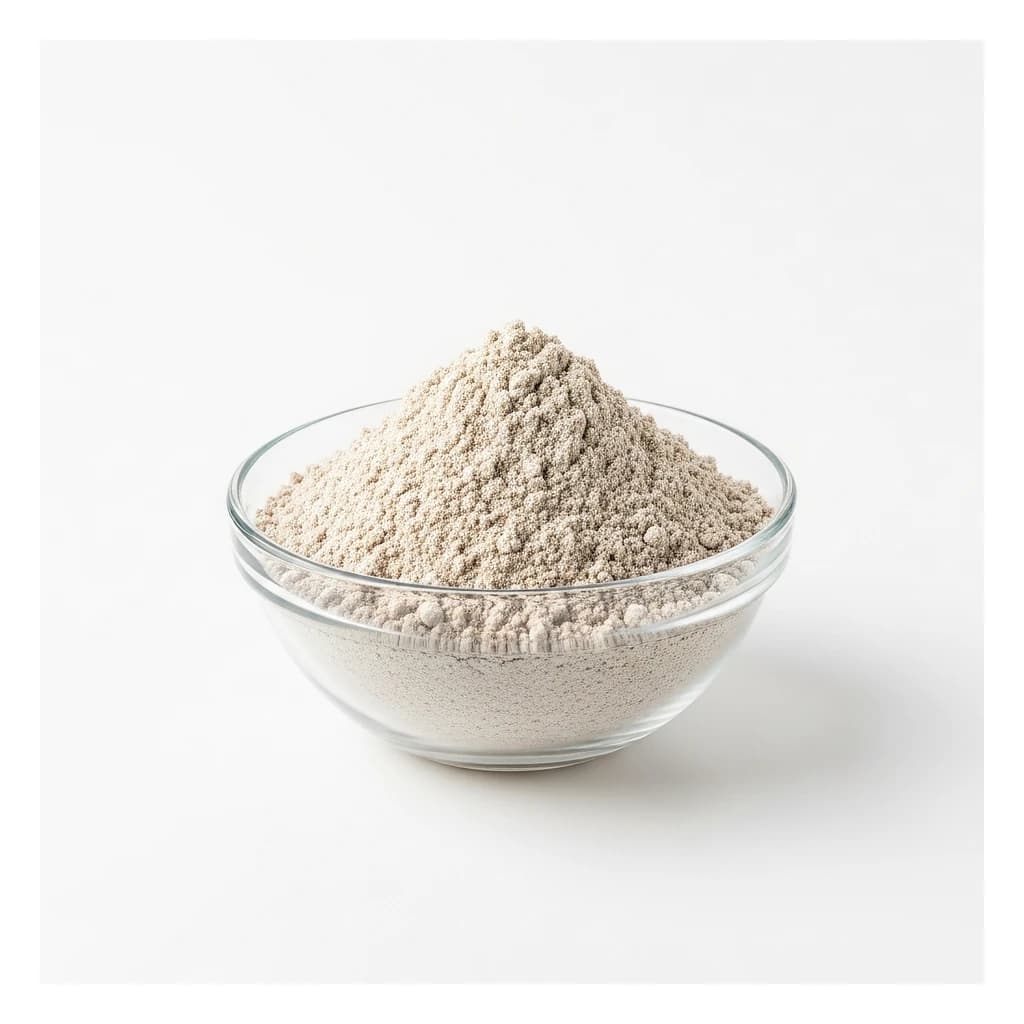
Rye is not low-gluten wheat — it is a different system. It has little usable gluten; its crumb is held by pentosans and gelatinised starch, and it carries high natural amylase. You can see this directly in the spec sheets: the Rye Flour Type 997 falling number is > 90 s against the wheat flour's ≥ 220 s — a low falling number signals aggressive amylase [ss-rye997, ss-wheat550]. Left unchecked, that amylase degrades the gelatinised starch into a gummy crumb, which is exactly why higher-rye loaves must be acidified with maia/sourdough, not raised by yeast alone [src-380]. Rye is a minority grain in Romania, favoured in the country's cooler, higher and more humid zones rather than the warm southern plains; historically the peasant "black bread" was rye, oats or barley, while white wheat bread signalled status [web-macinat-painea, web-berezka-secara]. The full rye craft is in A2-rye-sourdough-multi-stage, A5-sourdough-technology and A8-rye-and-wholegrain-formulas.
Corn has no gluten at all, so it cannot raise a loaf on its own. It became the poor-grain staple of the Romanian lands: cornmeal (mălai), corn/millet flatbreads (turtă) and corn porridge (mămăligă / coleșă) fed the countryside for centuries [web-wiki-mamaliga, web-macinat-painea]. The Agrol corn-flour datasheet gives the numbers — per 100 g, 375 kcal, protein 6 g, fibre 7.5 g, moisture ≤ 14.5 %, with ≥ 90 % passing a < 250 µm sieve — and it is a fine flour intended as an intermediate for further processing [ss-cornflour]. To make a sliceable corn bread you blend it with wheat flour (see data.json formula-turta-malai); pure corn gives you a dense turtă, not a risen loaf. See A1-alternative-grain-flours for the wider grain picture.
The regional map
Romania's loaves track its geography (see img-b4bl-01 and data.json table-regional-map); the canonical printed guide to this regional cuisine is Radu Anton Roman's Bucate, vinuri și obiceiuri românești [src-386]. The broad pattern: white wheat bread in the south and east, wood-fired pită and maia loaves across Transylvania, clay-bell bread in Oltenia, and a corn tradition in the uplands of the west and north.
Oltenia — pâine la țest, bread under a clay bell
The south-west owns the country's most distinctive baking vessel. Pâine la țest is a loaf baked not in an oven but under one: the țest is a dome-shaped, fired-clay bell, set over a flat loaf on an open hearth (vatră), with glowing embers heaped around and over it (see img-b4bl-03 and data.json spec-paine-la-test) [src-390, web-platferma-test]. The name comes from the Latin testum, an earthenware baking cover — the bell is shaped, appropriately, like a tortoise shell [src-390, web-platferma-test]. By tradition the method is described as having deep, Dacian-era roots — flatbreads of millet, rye and wheat baked under inverted clay vessels on a heated hearth [src-390]; treat that as a traditional origin narrative rather than a firmly dated one, since the oldest excavated țest so far reported (in Olt county) is dated only to about the 10th century AD [web-platferma-test]. The țest itself is a piece of folk engineering: moulded from yellow clay mixed with horse manure and chaff or straw for reinforcement, then fired like any pot before use [src-390, web-platferma-test]. In practice you pre-heat the bell with embers for about 30 minutes, shape a flat round (a lipie), brush it with egg or tomato juice, and bake it under the hot bell for roughly 30 minutes — often laying a fresh cabbage leaf over the dough to slow the browning [src-390]. Its advantage over a masonry oven is that it heats faster and burns less fuel (vegetable stalks, sunflower and maize stems) — which is also why Oltenia, historically, shows the highest household bread consumption of any Romanian region [src-390, web-artaalba-paine]. The same țest bakes the region's turtă de mălai (corn flatbread). To reproduce the effect without a real țest, bake in a pre-heated covered clay or cast-iron pot, or a hot wood/deck oven with steam (the oven physics are in A5-baking-oven-science); the formula is in data.json formula-paine-la-test.
Transylvania (Ardeal) — pită, pâine bătută and the Sântimbru loaf
Transylvania is wood-oven country, and its everyday word for bread is pită. Two loaves stand out.
Pâine bătută — literally "beaten bread" — is the region's showpiece (see img-b4bl-04 and data.json formula-paine-batuta and fault-test-woodfired). A soft wheat dough is baked in a very hot cuptor cu lemne (wood-fired oven) until it develops a thick, hard, dark crust; then, while the loaf is still warm, the crust is beaten with two wooden sticks so that it cracks and partly lifts away, giving the bread its signature crackled surface over a moist crumb [web-mihaigateste-painebatuta, web-tasteatlas-painebatuta]. It is worth being precise here, because the point is widely misdescribed: the defining action is beating the naturally thick wood-oven crust, not deliberately charring or burning it. An illustrative dough is simply strong wheat flour, fresh yeast, a little milk, water (around 800 ml per 1.5 kg flour), salt and optional sunflower seeds — a substantial rustic loaf (~250 kcal/100 g) traditionally eaten with sarmale (cabbage rolls) [web-mihaigateste-painebatuta].
Pita de Sântimbru shows the living, commercial face of the tradition. From Sântimbru in Alba county, it is baked to a recipe about 300 years old from flour, maia (sourdough), yeast, warm water and salt, in a brick hearth oven [web-transilvaniabiz-santimbru, web-evz-santimbru]. It has been named Romania's "Traditional Product of the Year" twice (2015 and 2017), and in 2018 was certified as the first organic (ecological) bread in Romania; as a registered traditional product its output is capped (around 800 kg/day), it is OSIM-registered and its makers have pursued EU protected status [web-transilvaniabiz-santimbru, web-evz-santimbru]. These are regulated certification and labelling claims — organic labelling is governed by EU Regulation 2018/848 and the ~800 kg/day cap by Romania's traditional-product rules — so verify the current certification and registration status before repeating them, and never transfer them to your own products without your own certification [reg-eu-2018-848]. Transylvania also preserved communal village ovens into the mid-20th century (as at Șcheii Brașovului), where families baked large loaves — a franzelă of 0.8 up to 4 kg — in turn [web-artaalba-paine]. And through the Saxon (Transylvanian-German) legacy, rye and mixed-rye loaves have a real, if minority, home here [web-macinat-painea].
Ținutul Secuiesc — the Székely potato bread
In the Székely Land of eastern Transylvania, the signature loaf is pâine cu cartofi / pâine secuiască (Székely potato bread; pityókás kenyér in the Székely-Hungarian dialect). Boiled, mashed yellow starchy potatoes go into a wheat dough, and the potato is the whole point: it adds moisture, keeps the crumb soft and fine, and makes the bread slow to stale — it stays fresh for days and does not crumble when sliced (see img-b4bl-05 and data.json formula-paine-secuiasca) [web-kovacs-secuiasca, web-savoriurbane-secuiasca]. The traditional method builds a maia matured about 24 hours and hand-kneads the dough so the potato distributes evenly [web-kovacs-secuiasca]. Weigh the potato as an addition to the flour (25–35 % of flour weight) and cut the free water to compensate for the moisture it brings; mash by hand, not machine, or the crumb turns gluey (see data.json fault-potato-corn). The enriched-dough craft this borrows from is in A8-enriched-dough-formulas.
Moldova, Muntenia and the rest
Across the east, Moldova is associated with the thin lipie moldovenească and with everyday franzelă and country pâine de casă; Bacău's Pambac is a historic regional miller-baker [web-delumani-paine, web-artaalba-paine]. Across the south — Muntenia/Wallachia and Bucharest — the white loaf reigns: franzelă and pâine albă dominate, and franzelă alone accounts for roughly 70 % of national bread consumption [web-antena3-franzela]. In the west and north-west — Banat, Crișana and Maramureș — the word is again pită [web-regionalisme-pita], and the corn tradition is strong in the hills, where the corn porridge that Muntenians call mămăligă is regionally known as coleșă [web-wiki-mamaliga]. Dobrogea, the south-eastern grain belt on the Danube, is everyday-wheat country that also overlaps with the Turkic and Balkan flatbread influences covered in the Turkish and Bulgarian dossiers (B2, B6).
Leaven: maia and drojdie
Two leavening worlds sit behind the map (see data.json table-terminology and B4-maia-and-sourdough-tradition). Maia / plămădeală is the natural sourdough starter of the country loaf — the engine of Pita de Sântimbru, Székely potato bread and wood-oven pită [web-transilvaniabiz-santimbru, web-kovacs-secuiasca]. Drojdie is baker's yeast, fresh or dried, the workhorse of everyday and commercial bread [src-380]. On the platform, live sourdough options run from a true starter (Böcker Reinzucht-Sauerteig, Malmon) to convenience acidifiers: the IREKS liquid sour on file is a dosing agent for wheat, rye and mixed-rye bread — pH 2.5–3.1, degree of acidity 185–210, added at about 5 % — built from water, lactic acid (E270), acetic acid (E260), barley-malt extract and rye flour [ss-ireks-liquidsour]. It is a shortcut to maia-style sourness, not a living culture; the microbiology of a real maia is in A5-sourdough-technology and B4-maia-and-sourdough-tradition. The yeast-vs-sourdough decision is the same one covered in A2-rye-sourdough-multi-stage and A5-dough-mixing-methods.
A note on the modern market
The context a B2B baker needs, briefly (the full market picture is in B4-romanian-bakery-market-and-ingredients). Romania has long been among Europe's higher per-capita bread consumers, but the trend is downward and premium-ward: the bakers' association ROMPAN reports consumption has fallen to about 82 kg per capita per year (from roughly 92 kg a decade earlier), still above the EU average of about 78 kg [web-economica-rompan]. As of 2014 the national bread and bakery market was estimated at over 2 million tonnes a year and about €1 billion [web-rowiki-paine], with white franzelă taking the lion's share [web-antena3-franzela]; the shift toward premium, packaged and specialty products is tracked in market analyses of the sector [src-396].
Health and label notes (flagged for review)
This is a category where allergens and food safety are load-bearing, not a footnote. All figures below are first-party datasheet data and are flagged for human review before publication.
Gluten. The white wheat flour and the rye flour both declare the allergen cereals containing gluten and state they are not intended for gluten-sensitive consumers [ss-wheat550, ss-rye997]. The IREKS liquid sour also carries gluten (barley malt + rye) [ss-ireks-liquidsour].
May-contain traces. The white wheat flour notes possible traces of soy, lupin and mustard and that some batches carry ascorbic acid (E300) [ss-wheat550]; the rye flour notes possible soy, mustard and lupin traces [ss-rye997]; the IREKS liquid sour notes that egg, soy, milk, mustard, sesame and lupin traces cannot be excluded [ss-ireks-liquidsour]. Lupin and mustard are mandatory declared allergens under EU Regulation 1169/2011 Annex II — any finished bread using these must declare them if present [reg-eu-1169-2011].
Egg and milk in glazes and enriched loaves. Two traditional steps add further declared allergens. The egg wash brushed on a pâine la țest (the tomato-juice glaze is the egg-free alternative), and the milk in an enriched pâine bătută dough, are both mandatory declared allergens under EU Regulation 1169/2011 Annex II — any finished loaf using them must declare egg and/or milk [reg-eu-1169-2011, src-390, web-mihaigateste-painebatuta].
Corn is not automatically coeliac-safe. Corn is a naturally gluten-free grain, but the Agrol corn-flour spec notes it is produced on premises also handling celery (celery may-contain), and that it is an intermediate for further processing — and in practice corn breads are blended with wheat flour for structure [ss-cornflour]. Do not represent a corn/turtă product as gluten-free without a verified gluten-free supply chain and testing.
Field-toxin limits. The Rye Flour Type 997 spec caps deoxynivalenol (DON) ≤ 750 µg/kg, ergot alkaloids ≤ 500 µg/kg and aflatoxin B1 ≤ 2 µg/kg [ss-rye997]; the corn flour caps aflatoxin B1 ≤ 2.0 µg/kg, ochratoxin A ≤ 3.0 µg/kg and zearalenone ≤ 50.0 µg/kg per EU Regulation 2023/915 [ss-cornflour]. One caveat needs human review before publication: the rye datasheet's DON guarantee of ≤ 750 µg/kg is looser than the EU maximum of 600 µg/kg now in force for cereal milling products for direct human consumption (Regulation (EU) 2024/1022, applicable from 1 July 2024), so that guarantee alone does not assure compliance — request a current CoA and confirm the actual DON result against the limit in force [reg-eu-2024-1022]. The ergot-alkaloid limit for rye milling products remains 500 µg/kg, with the reduction to 250 µg/kg postponed to 1 July 2028 [ss-rye997].
The țest as bakeware. The traditional țest is moulded from clay reinforced with straw/chaff and horse manure and fired like pottery; the organic reinforcement burns off in firing. As a historical method this is authentic, but any vessel reproduced for commercial use is a food-contact material and must meet EU Regulation 1935/2004 and the heavy-metal (lead/cadmium) migration limits for ceramic articles before it touches saleable product — confirm food-contact suitability with the maker [src-390].
Buy it: from the map to the order sheet
The whole map maps back to the catalogue (see data.json table-catalogue-map):
- Franzelă / pâine albă: strong white wheat flour — Domson White Strong Wheat Flour, Windrush Strong White, Wheat Flour Type 850 — with Fresh Yeast Benevia (Lesaffre) or dried Pakmaya / Fermipan Red (Lallemand).
- Pâine de casă / pită on maia: Domson Bread Flour Type 750 + a little rye, leavened with a live starter (Böcker Reinzucht-Sauerteig) or the IREKS Liquid Wheat Sour / Zeelandia Amore Wheat Sourdough as a shortcut.
- Pâine la țest: Domson Bread Flour Type 750, yeast or maia, and a țest or covered-pot / hot-deck bake.
- Pâine cu cartofi (Székely): Domson White Strong Wheat Flour + boiled potato (or Potato Flakes from Wimpex/Stolon where fresh is impractical) + maia.
- Pâine de secară / mixed rye: Rye Flour Type 997 / 720 / 1150 + wheat, acidified with IREKS Natural Liquid Rye Sour or Uldo Sauer Dark Rye Sourdough Concentrate.
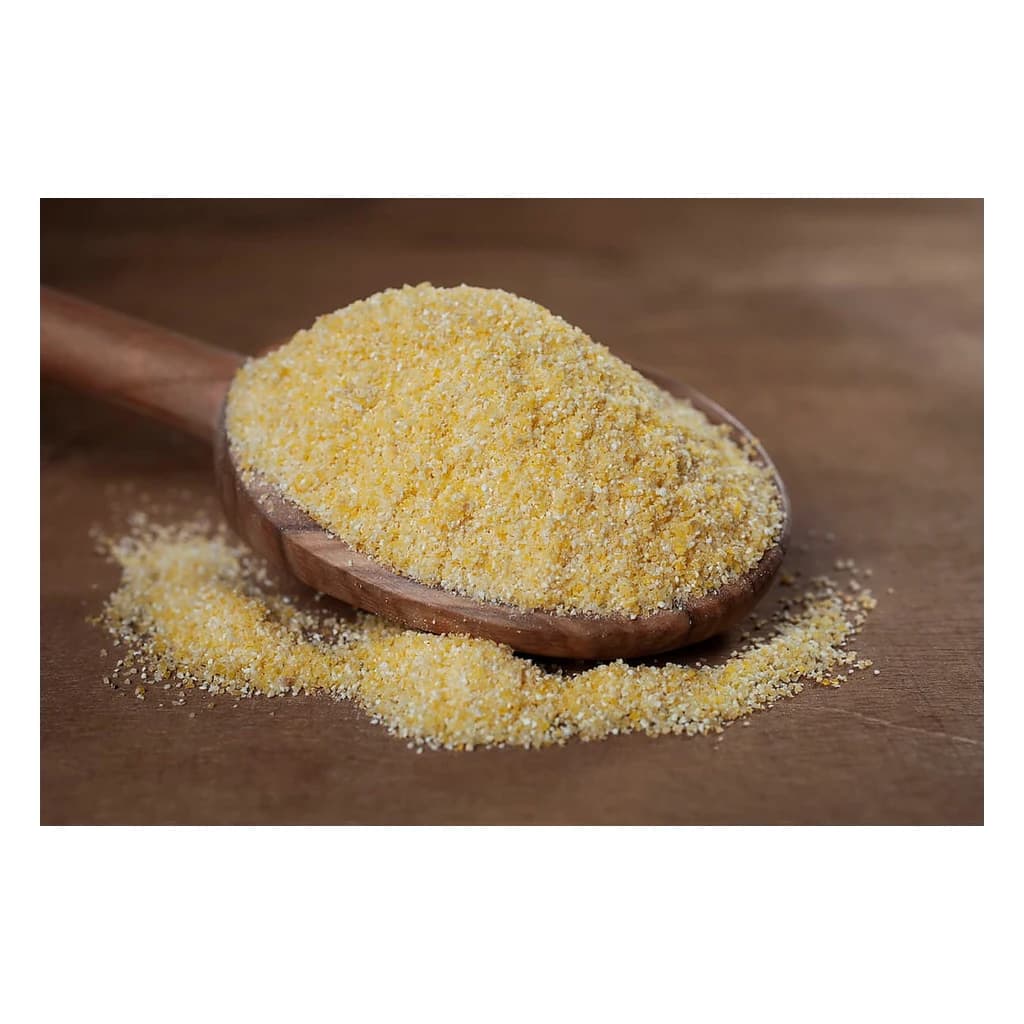
- Turtă / pâine de mălai: Corn Flour (Agrol) blended with wheat flour, or the Ireks Corn Bread Mix; Yellow Maize Grits (Polenta) for topping.
The flour-type crosswalk that makes these substitutions safe is in B4-flour-classification-romanian, the sourdough craft in B4-maia-and-sourdough-tradition, and the festive enriched breads (cozonac and the rest) in B4-cozonac-enriched-dough.
See data.json for the full comparison tables, formula cards (franzelă, pâine la țest, Székely potato bread, corn bread, mixed rye) and fault-finders, images.json for the map and process diagrams, and sources.json for every citation.
Pâine albă de casă / franzelă — everyday white wheat loaf (illustrative, baker's %)
| Ingredient | Baker's % | Weight |
|---|---|---|
| Strong white wheat flour (Typ 550-class) | 100% | |
| Water | 60–63% | |
| Fresh yeast (drojdie) | 2–3% (≈1% if dried) | |
| Salt | 1.8–2.0% | |
| Sunflower oil (optional, for softness) | 2–3% |
- Mix and develop the gluten fully (unlike rye, wheat rewards kneading). Bulk ferment ~1 h, shape, final proof, bake with steam ~220 °C. See A5-dough-mixing-methods and A5-proofing-science.
Yield: ≈2 × 500 g loaves per 1 kg flour
The Romanian everyday loaf: strong white wheat flour, yeast, no sourdough. A teaching baseline, not a fixed recipe. Baker's-percentage basics are in A8-bakers-percentage-fundamentals; enriched/festive doughs are in B4-cozonac-enriched-dough.
Pâine la țest — Oltenian clay-bell hearth loaf (illustrative, baker's %)
| Ingredient | Baker's % | Weight |
|---|---|---|
| Wheat flour (Type 650/750) | 100% | |
| Water | 60–65% | |
| Fresh yeast or mature maia | yeast 1.5–2%, or maia 20–30% of flour pre-fermented | |
| Salt | 1.8–2.0% | |
| Egg or tomato-juice wash (finish) | to glaze |
- Pre-heat the țest with embers ~30 min. Shape a flat round (lipie), glaze, and bake under the hot bell ~30 min; a fresh cabbage leaf over the loaf slows browning. Embers are kept heaped around the bell throughout.
Yield: 1 round lipie-shaped loaf ~0.8–1 kg
A simple lean dough whose identity is the vessel, not the recipe. Traditionally leavened with yeast (historically fermented-fruit foam) or maia. Bake under a pre-heated țest, or reproduce the effect in a covered clay/cast-iron pot or a hot wood/deck oven with steam. Vessel detail in img-b4bl-03 and table-vessels.
Pâine cu cartofi / pâine secuiască — Székely potato bread (illustrative, baker's %)
| Ingredient | Baker's % | Weight |
|---|---|---|
| Strong wheat flour | 100% | |
| Boiled, mashed yellow potato | 25–35% (of flour weight) | |
| Water (reduced for the potato's moisture) | 40–50% | |
| Mature maia (matured ~24 h) | 20–30% of flour pre-fermented | |
| Fresh yeast | 1–2% | |
| Salt | 1.8–2.0% |
- Mash the boiled potato smooth (a masher, not a machine, so it doesn't turn gluey). Combine with flour, maia, yeast and reduced water to a soft, slightly sticky dough; hand-knead to distribute the potato. Bulk ferment, shape, proof, bake ~220 °C. See B4-maia-and-sourdough-tradition.
Yield: 1 loaf ~1 kg
Potato is the point: it adds moisture and keeps the crumb soft and fresh for days. Weigh the potato as an addition to flour, and cut free water because the potato carries its own. Related enriched-dough craft in A8-enriched-dough-formulas.
Turtă / pâine de mălai — corn bread (illustrative, baker's %)
| Ingredient | Baker's % | Weight |
|---|---|---|
| Corn flour (mălai fin) | 40–50% | |
| Wheat flour (for structure) | 50–60% | |
| Water/milk | 65–75% | |
| Fresh yeast | 2–3% (omit for an unleavened turtă) | |
| Salt | 1.8–2.0% |
- Optionally scald part of the corn flour with hot liquid for a softer crumb. Mix to a heavy batter/soft dough; for a leavened loaf, proof and bake ~200–210 °C; for a turtă, press flat and bake on a plită/tray. Ireks Corn Bread Mix is the fast route.
Yield: 1 flat loaf / round
Corn has no gluten, so a sliceable corn bread needs wheat flour (or a strong binder) for structure — pure-corn turtă is a dense flatbread, not a risen loaf. This corn flour is a naturally gluten-free grain but is milled on premises handling celery and is NOT coeliac-safe (see health notes). Historic corn context in table-grain-systems.
Pâine de secară — mixed rye loaf (illustrative, baker's %)
| Ingredient | Baker's % | Weight |
|---|---|---|
| Rye flour (Type 997/1150) | 40–60% | |
| Wheat flour (Type 750/850) | 40–60% | |
| Rye sourdough or IREKS liquid sour (pH 2.5–3.1) | sourdough 30–40% of flour pre-fermented, or liquid sour ~5% on flour | |
| Water | 68–78% | |
| Fresh yeast | 1–1.5% | |
| Salt | 1.8–2.0% |
- Mix briefly (no gluten to develop on the rye fraction); keep the dough wet and sticky. Bulk-ferment on the sour, shape into tins, proof, bake with steam 240 → 220 °C. Higher rye = more acid and more tin support.
Yield: 1 tin loaf ~0.9 kg
Rye must be acidified: use a rye/liquid sour, not yeast alone, or the amylase-degraded starch bakes gummy. Rye is a minority grain in Romania but a genuine upland/Transylvanian tradition. Full rye-process craft in A2-rye-sourdough-multi-stage, A5-sourdough-technology and A8-rye-and-wholegrain-formulas.
Pâine bătută — Transylvanian beaten-crust wood-oven loaf (illustrative, baker's %)
| Ingredient | Baker's % | Weight |
|---|---|---|
| Strong wheat flour | 100% | |
| Water | ≈53% (~800 ml per 1.5 kg flour) | |
| Milk | ≈10% | |
| Fresh yeast (drojdie) | ≈4% (60 g per 1.5 kg) | |
| Oil (olive in the source recipe; sunflower is a common substitute) | ≈3% (~3 tbsp per 1.5 kg) | |
| Salt | ≈0.8% (~2 tsp per 1.5 kg in the source) | |
| Sunflower seeds (optional) | ≈7% |
- Mix a soft dough, develop, bulk ferment and shape. Bake in a well-heated wood-fired oven (~2 h fired) until the crust is thick, hard and dark. Immediately, while warm, beat the crust with two sticks so it cracks and partly lifts; rest ≥30 min before slicing.
Yield: 1 large rustic loaf (~1.5 kg flour)
The identity is the process, not the recipe: a soft wheat loaf baked hot in a wood-fired oven to a thick hard crust, then BEATEN with wooden sticks while warm so the crust cracks (not charred). Percentages reconstructed from a native recipe (~1.5 kg flour, ~800 ml water). Oven physics in A5-baking-oven-science.
The country's signature loaves sorted by historic region. Read a Romanian loaf by four things at once: the grain, the leaven (drojdie yeast vs maia sourdough), the baking vessel, and the region it belongs to. Attributions are drawn from Radu Anton Roman, RRI, artaalba and regional recipe sources; treat them as the dominant association, not an exclusive one.
| Region | Signature bread(s) | Grain | Leaven | Vessel | Notes | Sources |
|---|---|---|---|---|---|---|
| Oltenia (SW) | Pâine la țest; turtă de mălai la țest | Wheat; corn (mălai) | Yeast or maia; turtă often unleavened | Țest — fired-clay bell on an open hearth (vatră) | Ancient Dacian-rooted method; highest historic household bread consumption | src-390, web-platferma-test, web-artaalba-paine |
| Transylvania / Ardeal | Pită; pâine bătută; Pita de Sântimbru (Alba) | Wheat; some rye | Maia and/or yeast | Wood-fired hearth oven (cuptor cu lemne pe vatră); communal ovens historically | 'Pită' = the regional word for bread; beaten-crust and organic-certified traditional loaves | web-tasteatlas-painebatuta, web-mihaigateste-painebatuta, web-transilvaniabiz-santimbru, web-regionalisme-pita |
| Ținutul Secuiesc (Székely Land, E Transylvania) | Pâine cu cartofi / pâine secuiască (pityókás kenyér) | Wheat + boiled potato | Maia (matured ~24 h) + yeast | Wood/deck oven | Potato keeps the crumb soft, moist and slow to stale | web-kovacs-secuiasca, web-savoriurbane-secuiasca |
| Moldova (NE) & Bucovina | Lipie moldovenească; franzelă; pâine de casă | Wheat; some rye/corn in the uplands | Yeast; maia for country loaves | Wood oven; modern deck | Thin flatbread (lipie) tradition; Pambac a historic regional miller/baker | web-delumani-paine, web-artaalba-paine |
| Muntenia / Wallachia (S) & Bucharest | Franzelă; pâine albă | Wheat (white) | Yeast | Modern deck / industrial | White-loaf heartland; franzelă ~70% of national consumption | web-antena3-franzela, web-artaalba-paine |
| Banat, Crișana & Maramureș (W/NW) | Pită; corn breads (coleșă/mălai family) | Wheat; corn | Yeast; maia | Wood oven; plită griddle for corn | Central-European (Habsburg) influence; strong corn tradition in the hills | web-regionalisme-pita, web-wiki-mamaliga |
| Dobrogea (SE) & the Danube | Everyday wheat loaves; multi-ethnic flatbreads | Wheat | Yeast | Modern deck / industrial | Grain-belt region; overlaps with Turkic/Balkan flatbread influence (see B2, B6) | web-artaalba-paine |
The same object has different names by region, and some 'breads' are really flatbreads or porridges. Getting the vocabulary right is half of getting the product right for a Romanian customer.
| Term | What it means | Region / register | Sources |
|---|---|---|---|
| pâine | The standard word for (leavened) bread | National | web-rowiki-paine |
| pită | Bread — regional word; historically corn/mixed-cereal bread | Ardeal, Banat, Crișana, Maramureș | web-regionalisme-pita, src-382 |
| franzelă | French-style white wheat loaf; once a luxury, now the everyday loaf | National (word from the French/Balkan sphere) | web-antena3-franzela |
| lipie | Thin, flat wheat bread | Moldova especially; also the țest loaf shape in the south | web-delumani-paine, src-390 |
| pâine de casă | 'House bread' — a country loaf, often on maia | National (rural) | web-savoriurbane-secuiasca |
| turtă | Unleavened or barely-leavened flatbread, historically of corn/millet | Oltenia & uplands | web-wiki-mamaliga, src-390 |
| mălai | Cornmeal; also a baked corn bread/cake made from it | National (esp. rural) | web-wiki-mamaliga |
| mămăligă / coleșă | Corn porridge (not bread) — the corn staple; regionally also called coleșă | National; coleșă used in parts of Transylvania and the north-west | web-wiki-mamaliga |
| azimă | Unleavened bread (also the liturgical/ritual register) | National; Orthodox context in B4-pasca-and-ritual-breads | web-rowiki-paine |
| colac | Ring/plaited ritual loaf (feasts, weddings, funerals) | National — see B4-pasca-and-ritual-breads | src-382 |
| maia / plămădeală | Natural sourdough starter / the leaven built from it | National (artisan) | src-380, web-kovacs-secuiasca |
| drojdie | Baker's yeast (fresh or dried) | National | src-380 |
The oven is as much a regional signature as the flour. Each vessel gives a different crust, crumb and shelf life.
| Vessel | How it works | Breads | Sources |
|---|---|---|---|
| Țest (clay bell) | A domed fired-clay cover (clay + straw/chaff, fired like pottery) set over a flat loaf on an open hearth; embers heaped around/over it; stored heat bakes the loaf in ~30 min. Heats faster and uses less fuel than a masonry oven | Pâine la țest; turtă de mălai la țest | src-390, web-platferma-test |
| Cuptor cu lemne pe vatră (wood-fired hearth oven) | Masonry oven fired with wood, then baked on the retained-heat hearth; very hot, thick dark crust | Pâine bătută; Pita de Sântimbru; pită; pâine de casă | web-mihaigateste-painebatuta, web-transilvaniabiz-santimbru |
| Cuptor comun / communal oven | Shared village oven; families baked large loaves in turn — preserved in Transylvania into the mid-20th c. | Large household franzelă / pită (0.8–4 kg) | web-artaalba-paine |
| Plită / tavă (griddle / hot plate) | Flat iron plate or tray over heat for quick flat corn breads | Turte pe plită; mălai la tavă | web-wiki-mamaliga |
| Modern deck / industrial oven | Steam deck and tunnel ovens in today's bakeries and plant bakeries | Franzelă, everyday wheat bread, mixed/rye loaves | web-artaalba-paine, web-economica-rompan |
Romania's bread grains behave very differently. Match the grain to the leaven and the customer expectation.
| Grain | Baking behaviour | Romanian breads | Catalogue starting point | Sources |
|---|---|---|---|---|
| Wheat (grâu) | Gluten network holds gas; the default for airy white loaves; strong white flour for franzelă and country loaves | Franzelă, pâine albă, pâine de casă, pită, pâine bătută, potato bread | White strong wheat flour (Typ 550-class); Type 650/750/850 for country loaves | ss-wheat550, web-antena3-franzela |
| Rye (secară) | Little usable gluten — structure from pentosans + gelatinised starch; high amylase (falling number >90 s vs ≥220 s for wheat) means it MUST be acidified with maia/sourdough; minority grain, cool-climate uplands | Pâine de secară; mixed rye loaves; historic peasant 'black bread' | Rye Flour Type 997 / 720 / 1150 + a rye/liquid sour; see A2-rye-sourdough-multi-stage | ss-rye997, ss-wheat550, web-macinat-painea, src-380 |
| Corn (porumb / mălai) | No gluten — cannot make a risen loaf alone; historically a poor-grain staple; used for flatbreads/cakes (turtă, mălai) and porridge (mămăligă/coleșă). Needs wheat flour or a binder for a sliceable bread | Turtă de mălai, pâine/mălai de porumb, mămăligă (porridge) | Corn Flour + wheat flour; Ireks Corn Bread Mix; Yellow Maize Grits (polenta) | ss-cornflour, web-wiki-mamaliga |
How the map maps back to Domson catalogue products a UK-based Romanian bakery would actually buy. Flour type numbers here are the platform's stocked codes; the full Romanian vs Polish/EU flour-type crosswalk is in B4-flour-classification-romanian.
| Bread family | Grain / flour | Leaven | Catalogue starting points | Sources |
|---|---|---|---|---|
| Franzelă / pâine albă | Strong white wheat flour | Fresh or dried yeast | Domson White Strong Wheat Flour; Windrush Strong White; Fresh Yeast Benevia (Lesaffre); Dried Yeast Pakmaya / Fermipan (Lallemand) | ss-wheat550, web-antena3-franzela |
| Pâine de casă / pită (maia) | Wheat Type 650/750/850 + a little rye | Maia; liquid wheat sour as a shortcut | Domson Bread Flour Type 750; Wheat Flour Type 850; IREKS Liquid Wheat Sour; Zeelandia Amore Wheat Sourdough; Böcker liquid sourdough (Malmon) | ss-ireks-liquidsour, web-transilvaniabiz-santimbru |
| Pâine la țest | Wheat (Type 650/750) | Yeast or maia | Domson Bread Flour Type 750; Fresh Yeast Benevia; plus a țest or wood-deck bake | src-390, ss-wheat550 |
| Pâine cu cartofi (Székely) | Strong wheat + boiled potato | Maia + yeast | Domson White Strong Wheat Flour; Potato Flakes (Wimpex/Stolon) if fresh potato is impractical; Böcker liquid sourdough | web-kovacs-secuiasca, ss-wheat550 |
| Pâine de secară / mixed rye | Rye Type 997/720/1150 + wheat | Rye sourdough / liquid sour | Rye Flour Type 997; Rye Flour Type 720; IREKS Natural Liquid Rye Sour; Sauer Dark Rye Sourdough Concentrate (Uldo) | ss-rye997, src-380 |
| Turtă / pâine de mălai | Corn flour + wheat flour | Yeast (or unleavened turtă) | Corn Flour (Agrol); Ireks Corn Bread Mix; Yellow Maize Grits (polenta) for topping | ss-cornflour, web-wiki-mamaliga |
| Fault | Likely cause | Remedy | Sources |
|---|---|---|---|
| Pale, undercooked top under the țest | Bell not pre-heated long enough / embers not kept around it | Pre-heat ~30 min; keep embers heaped around and over the bell during the bake | src-390 |
| Crust too dark/scorched under the țest | Too much stored heat / loaf too close to the bell | Lay a fresh cabbage leaf over the dough to slow browning; ease the ember load | src-390 |
| Pâine bătută crust won't crack when beaten | Crust not thick/hard enough — oven too cool or bake too short | Bake hotter/longer in the wood oven to build a thick hard crust, then beat while still warm | web-mihaigateste-painebatuta |
| Dense, heavy wood-oven loaf | Under-proofed, or oven lost too much heat before loading | Prove fully; load at peak retained-hearth heat; use steam | web-transilvaniabiz-santimbru |
| Fault | Likely cause | Remedy | Sources |
|---|---|---|---|
| Gluey, gummy potato-bread crumb | Potato over-worked (machine-mashed) / too much potato / too much water | Hand-mash the potato; cap potato at ~25–35% of flour; cut free water to allow for the potato's moisture | web-savoriurbane-secuiasca, web-kovacs-secuiasca |
| Potato loaf stales fast anyway | Too little potato, or crumb over-baked/dry | Increase potato toward 30–35%; bake to temperature, not colour | web-kovacs-secuiasca |
| Corn bread crumbly, won't slice | Too little wheat flour — no gluten to hold it together | Raise wheat flour to ≥50% of total flour, or use a corn bread mix | ss-cornflour, web-wiki-mamaliga |
| Dry, dense corn bread | Corn flour under-hydrated | Scald part of the corn flour; raise hydration; add a little fat/milk | ss-cornflour |
| Gummy high-rye loaf | Insufficient acidification — rye amylase degraded the starch | Use a properly soured rye/liquid sour; don't lean on yeast alone; short mix | ss-rye997, ss-ireks-liquidsour, src-380 |
Buy the ingredients
Catalogue products and brands referenced in this article.
Rye Flour Type 720 20 kg
Wheat Flour Type 850 25 kg
Potato Flakes 25 kg
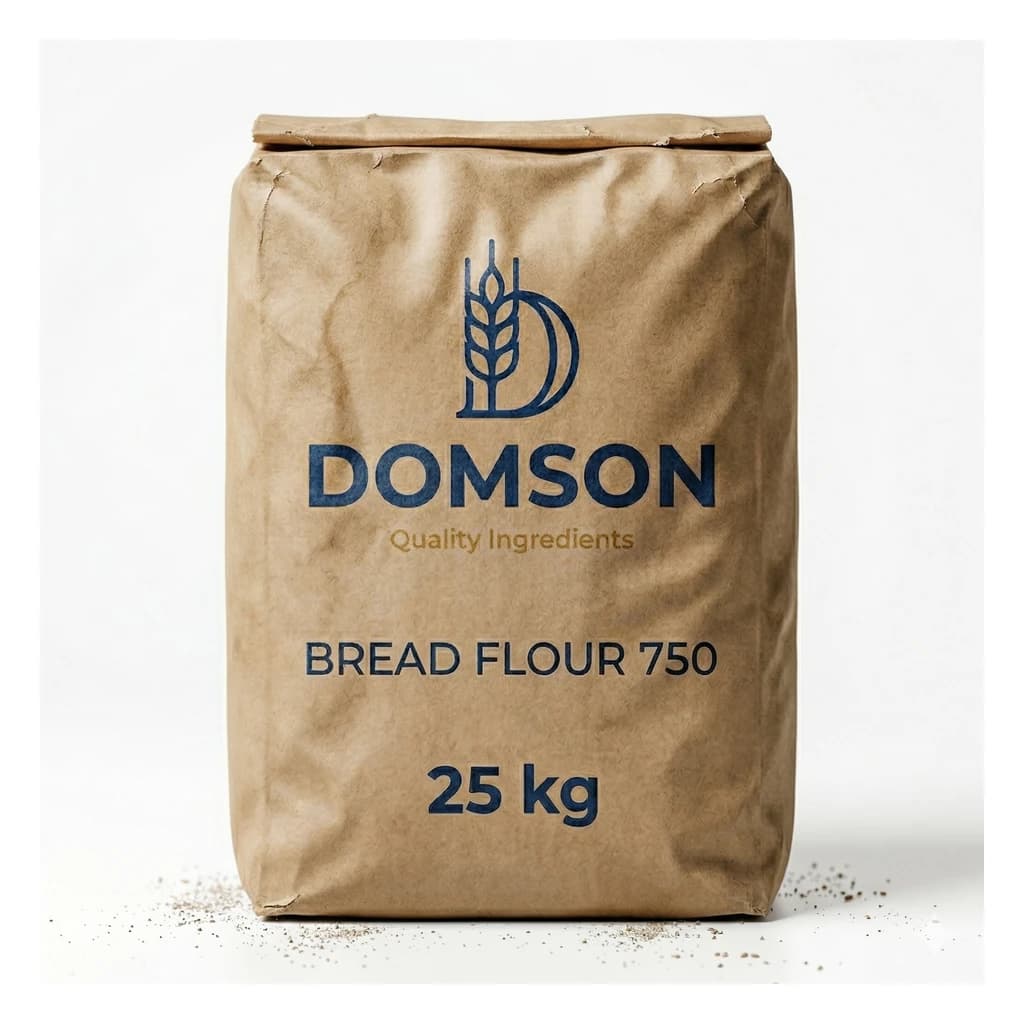
Domson Bread Flour Type 750 25 kg
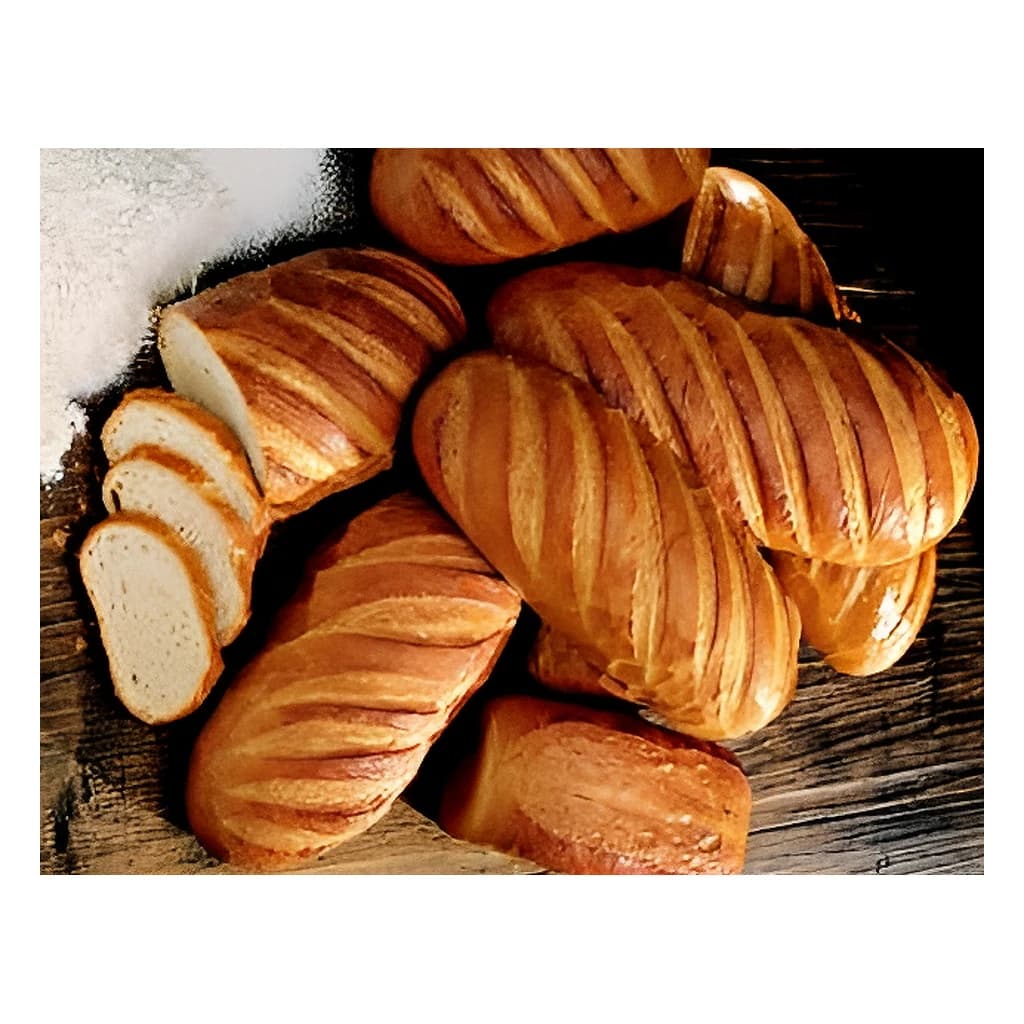
Sauer Dark Rye Sourdough Concentrate 25 kg
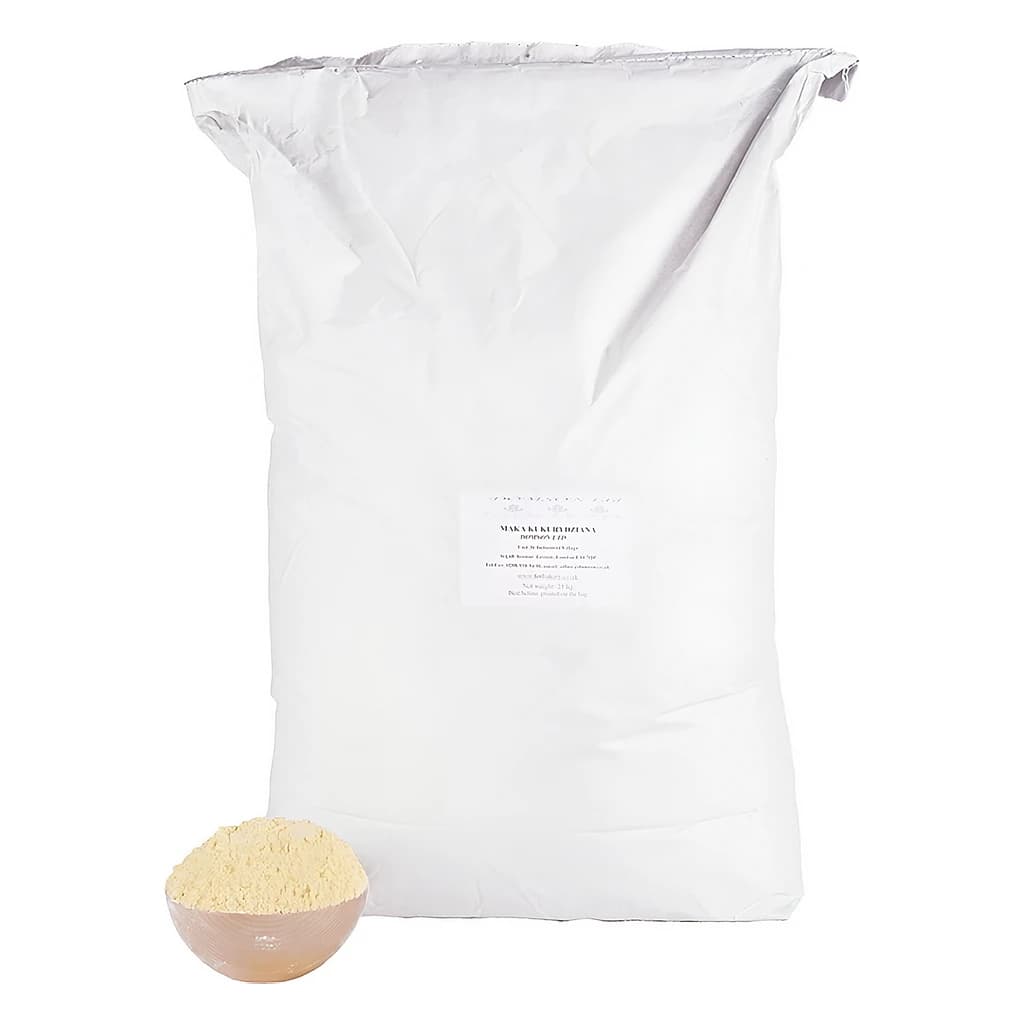
Corn Flour 25 kg
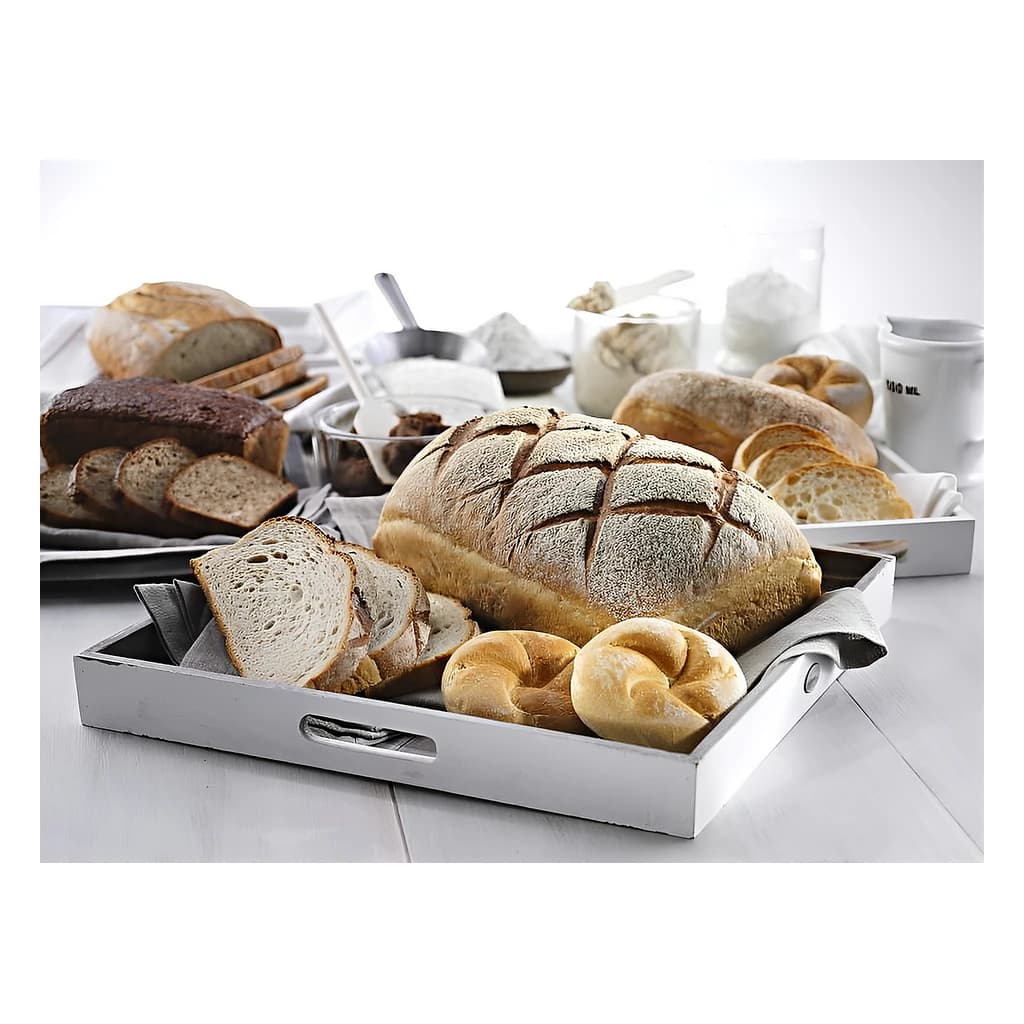
Zeelandia Amore Wheat Sourdough 13 kg
Potato Flakes 20 kg
Fresh Yeast Benevia 10 kg
Böcker Reinzucht-Sauerteig Pure Sourdough Starter 1 kg
Windrush Strong White Bread Flour 16 kg
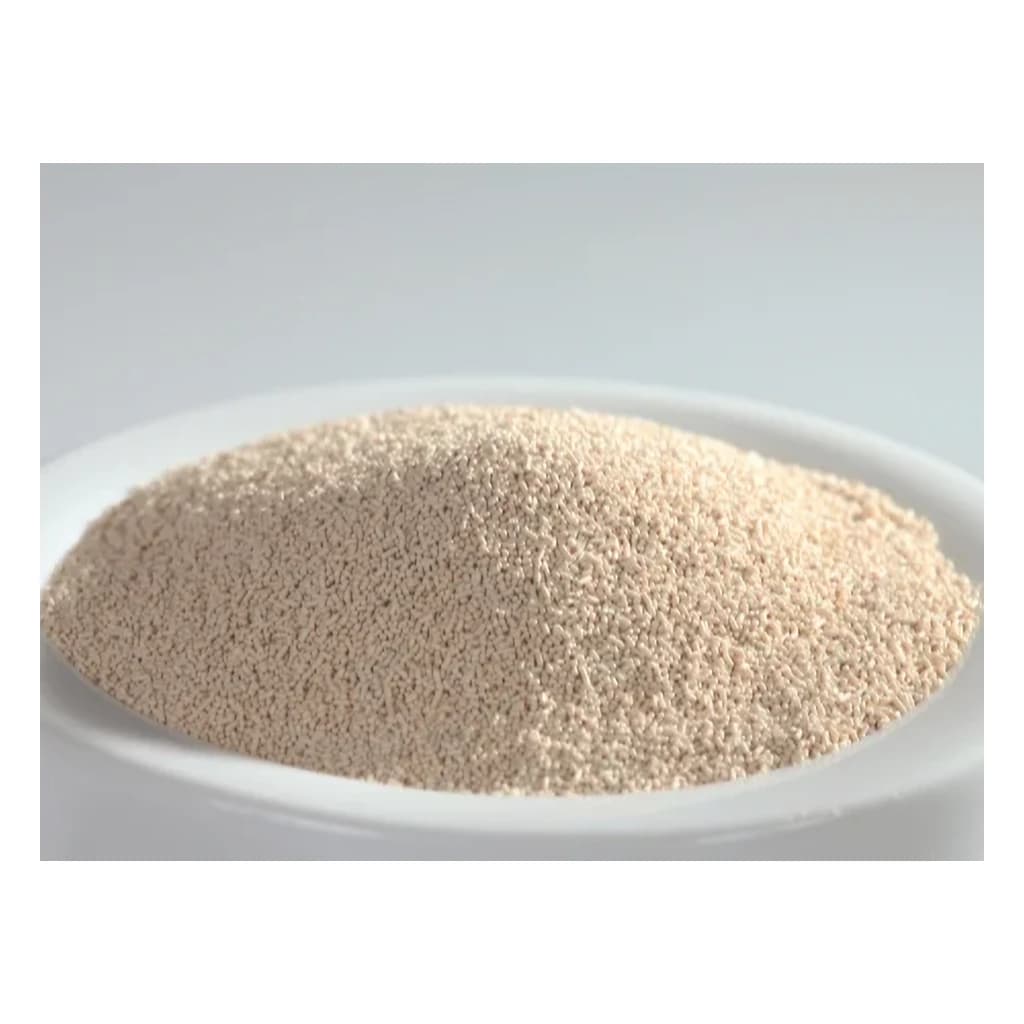
Dried Yeast Pakmaya 20 × 500 g (10 kg)
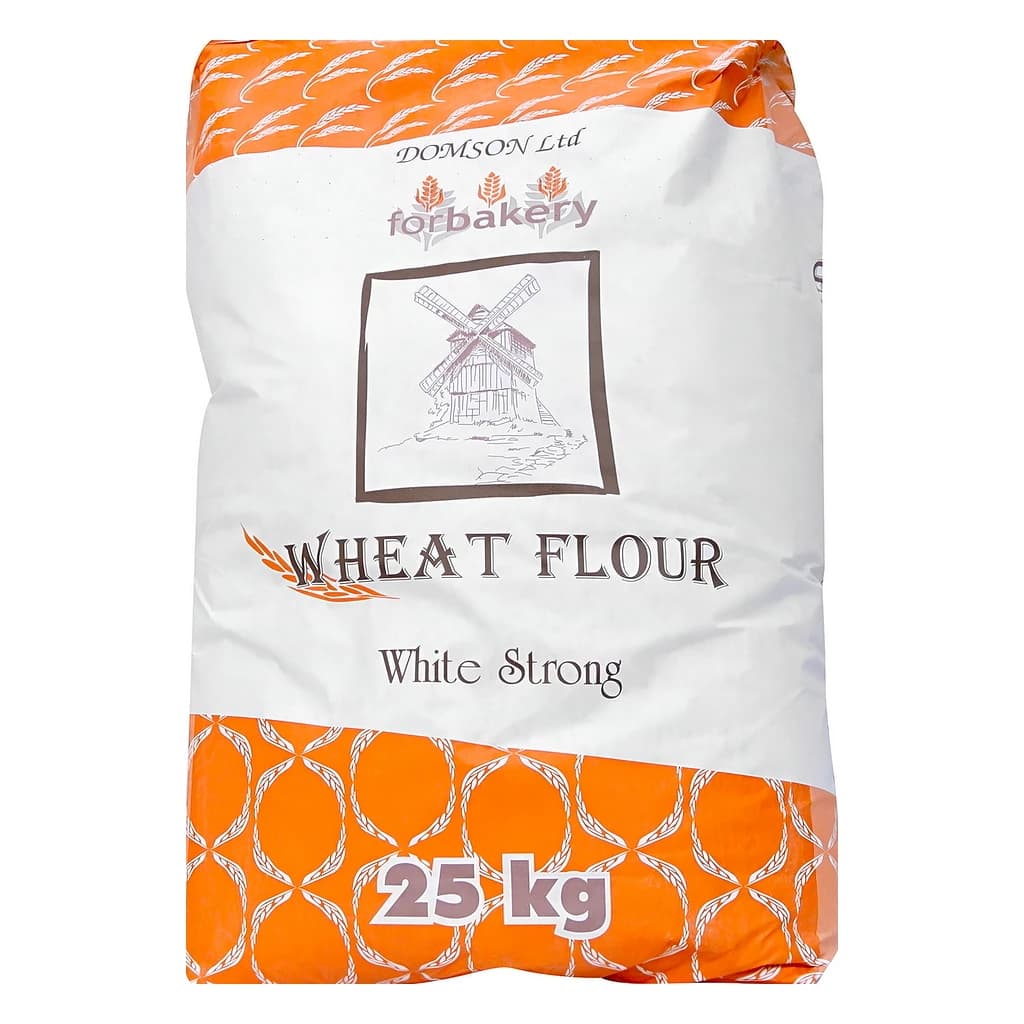
Domson White Strong Wheat Flour 25 kg
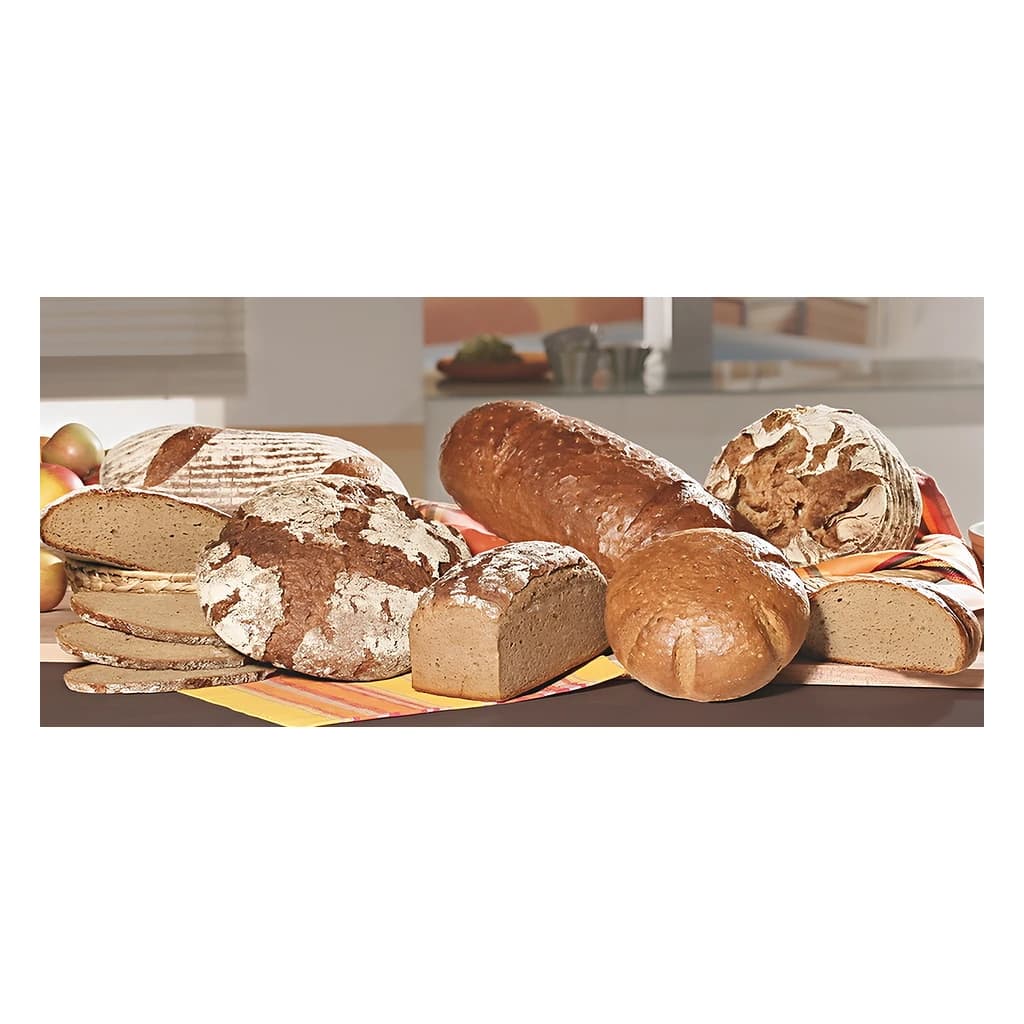
IREKS Natural Liquid Rye Sour 12.5 kg
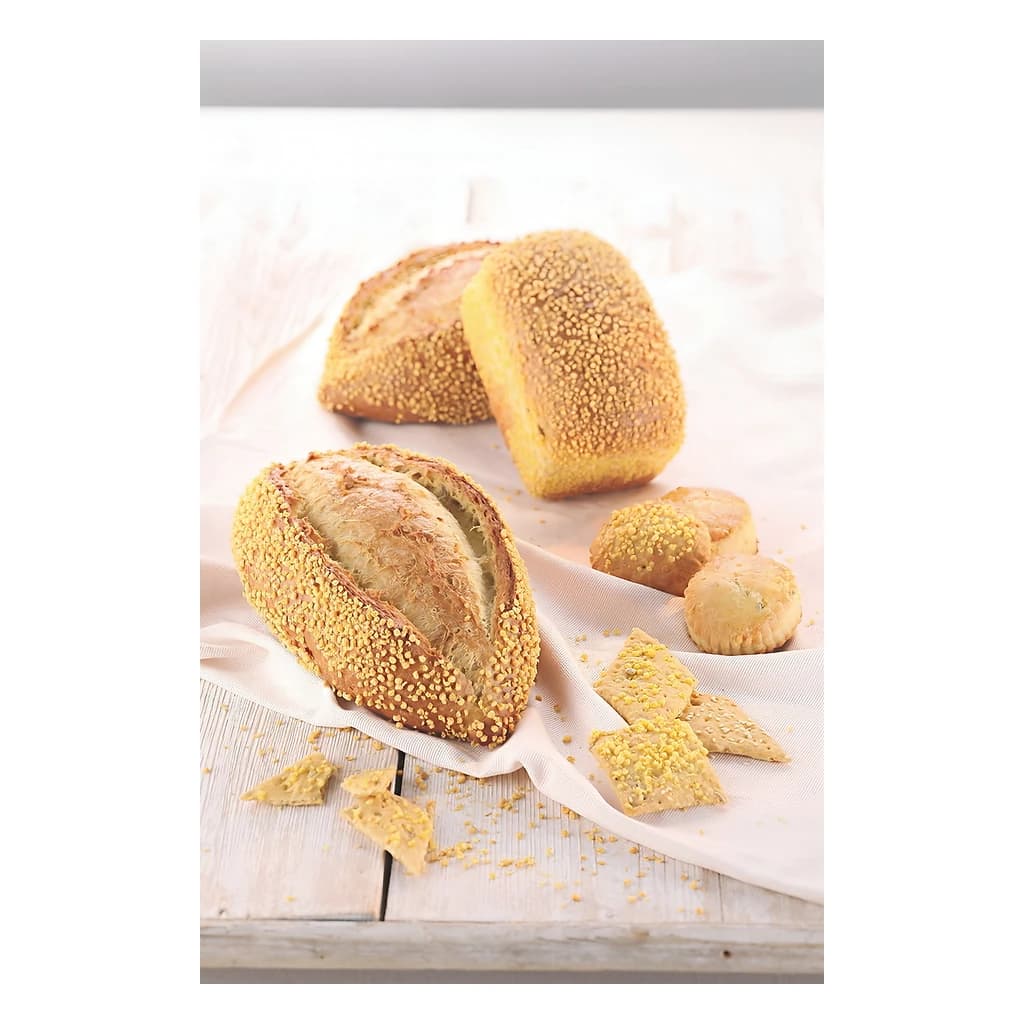
Ireks Corn Bread Mix 12.5 kg
IREKS Liquid Wheat Sour 12.5 kg
Dried Yeast Fermipan Red 10 kg
Yellow Maize Grits (Polenta) YG600 25 kg
Rye Flour Type 997 25 kg
Related reading
- Flour type numbers decoded: Polish T-codes, French T45–T150, German 550, Italian 00
- Rye, spelt, emmer and heritage wheats: baking behaviour and blending rules
- Rye Sourdough Fermentation: One-Stage, Two-Stage & Three-Stage Methods Explained
- Mixing methods compared: straight dough, sponge-and-dough, Chorleywood and activated dough development
- Sourdough technology: starter maintenance, LAB–yeast synergy, acidification curves and rye vs. wheat sourdoughs
- The baking stage: oven spring, steam injection, starch gelatinisation, Maillard reaction and crust formation
- Baker's percentage: the universal language of professional formulas
- Rye and wholegrain bread formulas: sourdough percentages, hydration and crumb density
- Romanian flour types decoded: Type 480, 000, 550, 650, 800, 1250 and whole-grain — ash, protein and choosing for each application
- Maia: Romania's sourdough culture — starter management, fermentation biology and wood-fired oven protocols
- Cozonac: mastering Romania's festive enriched bread — dough formula, gluten development and regional fillings
- Pască, colaci and ritual breads: the Orthodox liturgical calendar's baking demands
- The Romanian professional bakery market: flour standards, premix adoption, key ingredient suppliers and modernisation trends
Sources
- spec-sheetWhite wheat flour datasheet (GoodMills 'Product Description NR 03', Wheat Flour Typ 550) attached to Domson White Strong Wheat Flour 25 kg
- spec-sheetRye Flour Type 997 datasheet (GoodMills Polska, Product description No. 10, ZN-15/VK/10 v11)
- spec-sheetCorn Flour technical specification (Agrol, No. SWG/42, Edition 4, 17.01.2024)
- spec-sheetIREKS liquid sour / 'Płynny Zakwas' quality certificate (product no. 120506PL) attached to IREKS Liquid Wheat Sour 12.5 kg
- referenceNorma privind fabricarea, conținutul, ambalarea, etichetarea și calitatea făinii de grâu (Ordin 250/531/83/2002) (ro)
- academicUtilaje pentru morărit și panificație (curs universitar) — Conf. univ. dr. ing. Ioan Băisan (ro)
- academicDicționar de Simboluri și Credințe Tradiționale Românești — Romulus Antonescu (ediție digitală) (ro)
- referenceBucate, vinuri și obiceiuri românești — Radu Anton Roman (Editura Paideia) (ro)
- referencePâine la țest — Secretele bucătăriei românești (ro)
- referenceAnaliza pieței produselor de panificație în România (ro)
- referencePâine la țest și țăstul pentru pâine pe vatră (ro)
- referencePâine Bătută — Traditional Bread From Transylvania, Romania
- recipePâine bătută ardelenească (ro)
- brandPâinea secuiască, secretele unui preparat cu tradiție (ro)
- recipePâine secuiască cu cartofi — rețetă pas cu pas (ro)
- reference'Pita de Sântimbru', prima pâine ecologică din România (ro)
- referencePatimile celebrei 'Pite de Sântimbru' (ro)
- referencePâinea românilor în timp și spațiu / Romanian bread in time and space. Modern versus traditional (ro)
- referenceRegionalisme în limba română (pită = pâine; arii regionale) (ro)
- referenceCare este istoria cuvântului 'franzelă' (ro)
- referencePâinea, inima mesei românești (tipuri regionale: lipie moldovenească, pită ardelenească, pâine cu cartofi) (ro)
- referencePâinea — Casa Făinii (istoria pâinii, secară, statut social) (ro)
- referenceTot ce trebuie să știi despre pâinea de secară (ro)
- referenceMămăligă — Wikipedia
- trade-bodyROMPAN: Consumul de pâine a scăzut la 82 kg pe locuitor, dar este peste media europeană (ro)
- referencePâine — Wikipedia (RO) (ro)
- regulatoryRegulation (EU) No 1169/2011 on the provision of food information to consumers — Annex II (substances or products causing allergies or intolerances)
- regulatoryCommission Regulation (EU) 2024/1022 amending Regulation (EU) 2023/915 as regards maximum levels of deoxynivalenol in food
- regulatoryRegulation (EU) 2018/848 on organic production and labelling of organic products