Maia: Romania's sourdough culture — starter management, fermentation biology and wood-fired oven protocols
A practical, native-sourced guide to maia, the leaven at the heart of Romanian baking. It untangles the two meanings of the word — the wild maia naturală (sourdough starter) of the farmhouse and the yeasted maia (fermented sponge) of industrial technology — and shows how to build a maia from scratch in 7–10 days, feed and store it (including the old turtițe drying method), read the fermentation biology behind it, and run the classic indirect methods (monofazic / bifazic / trifazic). It covers wood-fired oven protocols including Oltenia's pâine la țest, the lactic cousins borș and huște, the Orthodox tradition of leavened liturgical bread (pâine dospită / prescură), and how to choose between a live maia and the ready sourdoughs, acidifiers, starter cultures and yeast in the Domson catalogue. Includes first-party supplier spec data.
Maia: Romania's sourdough culture — starter management, fermentation biology and wood-fired oven protocols
If Poland is a rye country, Romania is a wheat country — and its leaven has its own name and its own culture. That leaven is maia. A Romanian baker will tell you a good loaf lives or dies by its maia, and the word carries centuries of farmhouse practice, regional custom and even Orthodox theology inside it. This dossier is the practical manual for that leaven: what maia actually is (it means two different things), how to build and keep one, the biology that drives it, the wood-fired ovens it was made for, and how to back it up with what is on the Domson shelf. For the universal science underneath it, read it alongside A2-sourdough-cultures-science, A5-sourdough-technology and A2-preferments-poolish-biga-sponge; for where these loaves sit on the map, see B4-bread-landscape.
1. First, untangle the word: maia has two meanings
More confusion surrounds maia than any other word in the Romanian bakery, because it is used for two
related but different things (see the table-maia-meanings in data.json):
- Maia naturală — a wild sourdough starter: nothing but flour and water, colonised by the wild yeast and lactic acid bacteria that live on the grain. This is the artisan and home meaning, and the one most people mean today when they say "pâine cu maia" (bread with sourdough). Its folk synonym is plămădeală (from a plămădi, to leaven or to set to ferment).
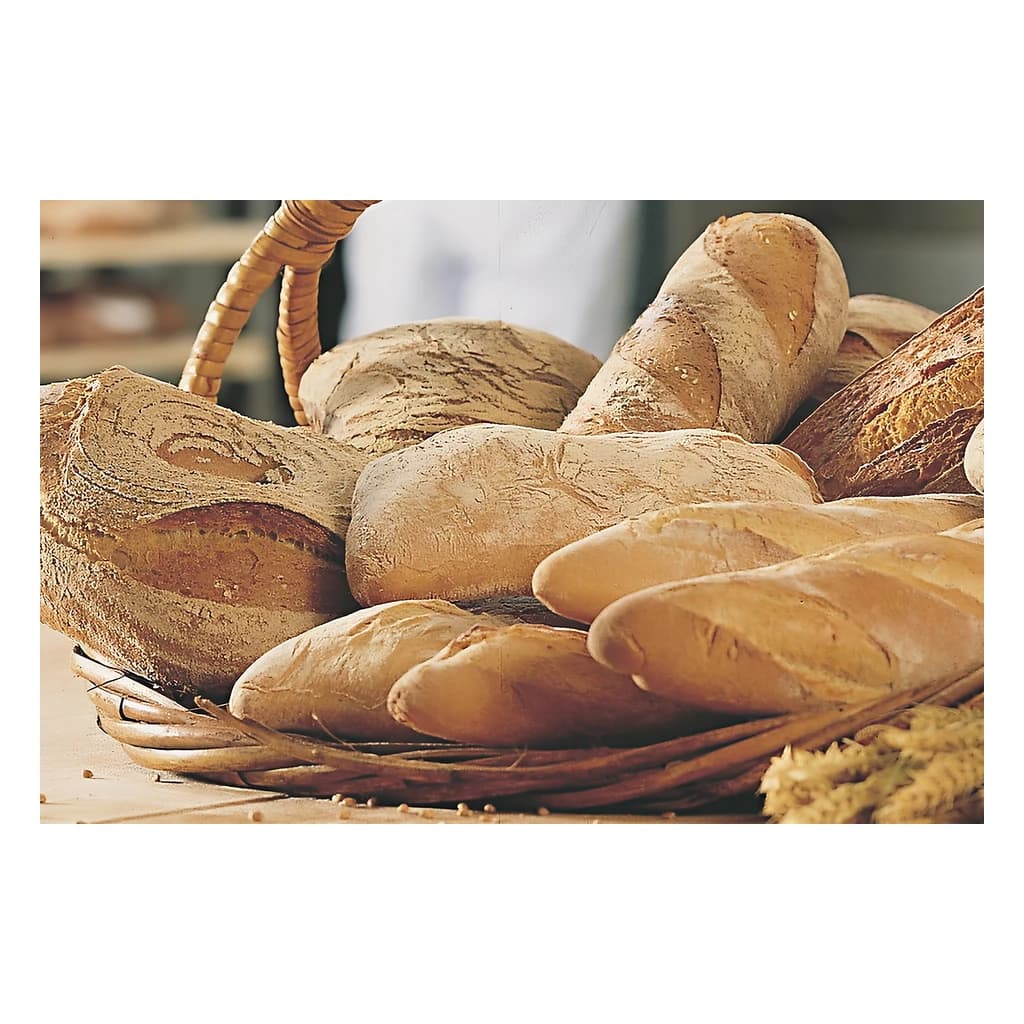
- Maia in industrial bakery technology — a fermented yeasted sponge: flour, water and all the baker's yeast (drojdie) for the batch, fermented for a few hours and then built into the final dough. Here maia is not a sourdough at all; it is the first phase of the indirect method (Section 5).
Both are "maia" and both are indirect ferments — you make a leaven first, then the dough. The difference is only what does the leavening: wild culture (maia naturală) or added yeast (industrial maia). Keep the two straight and everything else in this dossier falls into place.
2. Why maia, and why wheat
Romanian bread is overwhelmingly wheat bread — pâine albă and semi-albă — so a Romanian maia is usually a wheat maia, unlike the rye zakwas of Poland (compare B1-zakwas-sourdough). Wheat has a strong gluten network that traps gas on its own, so maia in Romanian baking is above all a flavour, digestibility and keeping-quality tool rather than the structural necessity that souring is for rye. Bakers and home cooks are explicit about the payoff: a maia bread is milder-sour, keeps longer and is easier to digest than a fast yeasted loaf, because a slow lactic fermentation develops lactic acid in the dough that a quick drojdie rise never produces. The trade-off is time — a maia works far more slowly than yeast. (For rye maia and the multi-stage rye logic, cross-read A2-rye-sourdough-multi-stage; for the microbiology, A2-sourdough-cultures-science.)
3. Building a maia naturală from scratch (7–10 days)
A maia naturală is just flour and water left to catch and grow the wild microflora on the grain. Build it
like this (full card: formula-build-maia-scratch):
- Flour. The microbes live on the husk of the grain, so build on a high-extraction flour: făină de secară (rye) or făină de grâu integral (wholemeal wheat). A common baker's heuristic (the cited source notes that rye carries the most wild microflora): rye speeds the process up, wholemeal wheat stabilises it, and white flour slows (tempers) it. (For what the type numbers mean, see B4-flour-classification-romanian and A1-flour-classification-systems.)
- Water. Non-chlorinated (filtered, or boiled and cooled), at room temperature to lukewarm — the cited recipe calls for water that is neither too hot nor too cold (roughly 20–30 °C); water any hotter risks harming the young culture.
- Ratio. 100% hydration — equal weights of flour and water (e.g. 100 g flour to ~100–150 g water).
- Temperature. Room temperature 20–26 °C, ideally 24–25 °C.
Day 1: mix ~100 g wholemeal (or rye) flour with room-temperature-to-lukewarm water to a thick batter and cover loosely (never sealed). Days 2–10: each day discard part and refresh (hrănire) with equal flour and water. The maia is ready — typically around day 7, and up to 10 days in cooler conditions — when it doubles within about 4–6 hours of a feed, is full of bubbles and smells pleasantly sour, like yogurt. The commonly used float test (a spoonful floats in water) is one convenient sign among several, though it is not infallible; judge readiness mainly by the rise, the bubbles and the smell. Below about 24 °C it takes longer; in a warm summer kitchen it is quicker.
Keeping it. On the counter, feed every 12–24 h; in the fridge, feed weekly and wake it with a feed or
two the day before you bake. The old, pre-refrigeration way was to preserve the maia as dried cakes —
turtițe: knead the mother stiff with flour, shape small flat cakes and dry them. To bake, take about
100 g dried turtițe per 1 kg of flour, soak them in warm water for a few hours, mix with a cup of
flour to a sour-cream-thick paste and leave to ferment (dospit) ~12 h before use (card:
formula-turtite-revival). It is the Romanian cousin of every farmhouse trick for carrying a starter
through the year without a fridge.
4. What is actually happening: fermentation biology
Two fermentations run in parallel in a maia and in the dough it leavens:
- Alcoholic fermentation by wild yeast (Saccharomyces and relatives) turns sugars into carbon dioxide (the lift) and ethanol.
- Lactic fermentation by lactic acid bacteria (LAB) present in the flour turns sugars into lactic and acetic acid, which raises the dough's acidity (aciditate) and gives maia bread its clean, mild tang.
As the acids accumulate the pH falls, the culture matures and — as with any sourdough — warmer, faster conditions favour mild lactic acid, while cooler, slower conditions build sharper acetic acid. That is your steering wheel for flavour. The deeper treatment of LAB–yeast synergy and acidification curves is the universal subject of A5-sourdough-technology and A2-sourdough-cultures-science; here it is enough to know that the bubbles and the sourness come from two different microbes working together.
5. The indirect method in Romanian technology (monofazic / bifazic / trifazic)
Romanian bakery technology codifies dough-making into a direct and an indirect route (table
table-indirect-methods; see also A2-preferments-poolish-biga-sponge):
- Procedeul monofazic (direct): all ingredients mixed at once. It is fast but gives insufficient taste and aroma, a crumbly crumb (miez sfărâmicios) that stales quickly, and uses a lot of yeast.
- Procedeul indirect — bifazic (two-phase): first make a maia (flour, water and all the yeast), ferment it, then build the final aluat on it. This is the most widely used method in practice; it suits good-quality flours and gives a better crumb and longer keeping.
- Procedeul indirect — trifazic (three-phase): prospătură → maia → aluat, adding a refreshment stage; used for high-extraction, weak or degraded flours.
The yeasted maia comes in two consistencies, with well-defined parameters (table
table-maia-consistency, card formula-bifazic-white-bread):
| Maia | Moisture | Flour share | Salt | Ferment | |------|----------|-------------|------|---------| | Fluidă (fluid) | 65–75% | 30–40% (80–82% of the water) | 0.7–1.0% | 3–4 h at 27–29 °C | | Consistentă (stiff) | 41–45% | 30–60% | — | 90–180 min at 25–29 °C |
Yeast is first dispersed as a suspension in warm water at 30–35 °C. The maia/sponge is mixed for 6–10 min; the final dough is then kneaded 8–20 min (short for weak flour to protect the gluten, longer for strong flour to build elasticity), given a final proof (dospire) of 20–90 minutes at 30–35 °C and 70–80% relative humidity, and baked. Note the crucial rule shared with the wild maia: salt goes into the final dough (and only lightly, 0.7–1.0%, into a fluid maia) — a maia naturală carries no salt, which would suppress the culture. See A5-bulk-fermentation and A5-proofing-science for the universal versions.
6. The regional picture and the lactic cousins
Maia naturală is used across the country, but the traditions around it differ by region — the full map is B4-bread-landscape; the headlines that touch souring are:
- Transylvania (Ardeal): the beloved pâine ardelenească cu cartofi ("Transylvanian potato bread", also pâine bătută cu cartofi), popularised in the 19th century — flour, water, salt and maia naturală, with boiled potato worked into the dough for a moist, elastic crumb and longer freshness, baked in a wood-fired oven.
- Oltenia: home of pâine la țest, baked under a clay bell (Section 7).
- Moldova: home of the most famous lactic cousin of maia — borș.
That cousin is worth knowing. Borș is the fermented wheat-bran (tărâțe) liquid used to sour Moldovan soups (ciorbă). It is made by fermenting bran — often with a little cornmeal (mălai) or dried bread — in water for 2–3 days, driven by a reserved lactic ferment called huște that is kept from one batch to the next exactly like a sourdough mother. In Moldova, "filling the borș" (a umple borșul) is a small ritual, traditionally done on Tuesdays and Thursdays. Borș is not a bread leaven, but it is the same lactic-fermentation instinct — a live culture kept alive by back-slopping — that a Moldovan kitchen also brought to its bread.
There were also home leavens older than the packet of yeast. The best documented is drojdie de hamei — a homemade hop yeast: hop cones (conuri de hamei) boiled about an hour, the strained liquid fermented with flour (about twice the weight of sugar) for a few days, with boiled potato purée added after about two days. (This method is single/weak-sourced and is offered as folk tradition, not a tested formula — treat with low confidence.)
7. Wood-fired oven protocols: pâine la țest and the vatră
Maia bread was made for wood heat. Two protocols matter (see A5-baking-oven-science for oven spring, steam and crust chemistry):
Pâine la țest — the clay bell of Oltenia. The țest is a portable clay dome — the word comes from the Latin testum, an earthenware baking pot or cover (the tradition glosses it evocatively as "tortoise shell", after the dome's shape) — under which the loaf bakes on the hearth. It is specific to Oltenia, and by tradition its roots are traced back to Dacian bread-baking. The țest itself is modelled from lut galben (yellow clay) mixed with balegă de cal (horse manure) and câlți (tow/hemp fibre) or paie (straw) for reinforcement, and fired before first use. To bake, a fire of kindling and plant residues — sunflower and corn stalks, dried vegetation — is burned down and the embers are heaped under and over the bell for about half an hour to load it with heat before the bread goes in. Historically, before commercial yeast, this bread was leavened with drojdie de bere (beer yeast) or with the foam skimmed from fruit fermenting in the cauldron for țuică (plum brandy) — improvised wild leavens, again the same instinct as a maia. Making a new țest was itself ritualised, done around Ropotinul (the third Tuesday after Easter), partly to ward off hail.
The vatră (hearth) and cuptorul cu lemne. A traditional peasant wood-fired oven is loaded very hot —
a well-fired wood oven commonly exceeds 300 °C at loading (general wood-oven practice) — then bakes on
falling, radiant heat. Industrial Romanian bread is still described as baked in cuptoare cu vatră
(hearth ovens) at 240–280 °C (the figure sourced to Romanian bakery technology), with baking times
from 10 minutes for rolls to 65 minutes for a 2 kg loaf and a weight loss of 8–18%. To reproduce a
maia loaf at home: because the maia works slowly, give it a long proof, then bake hot with steam and
reduce to finish — a standard home-oven schedule is ~230 °C with steam for the first 10–15 minutes, then
~200 °C (card formula-paine-de-casa-maia). The dough was traditionally kneaded in a wooden trough, the
covată.
8. Maia and the Orthodox table: leavened bread as doctrine
In Orthodox Romania the leaven is not only technical — it is theological. The Orthodox Church uses leavened bread (pâine dospită / artos) and not unleavened bread (azimă) in the Liturgy, because Christ used leavened bread at the Last Supper (Cina cea de Taină). The symbolism is explicit in Church teaching: leavened bread stands for Christ's ensouled human nature (firea omenească însuflețită) — the leaven representing the soul within the body — whereas unleavened bread symbolises death, not life.
This flows straight into the prescură (prosphora), the liturgical loaf. It is made from pure wheat flour (făină de grâu curat) with only water and salt; the wheat, ground from many grains gathered into one, symbolises the unity of the Church. It is dospită (leavened), stamped on top with the pecete / pistornic seal bearing IC XC NI KA ("Jesus Christ conquers"). Traditionally the prescură is leavened not with commercial yeast but with a salted maia / dospeală — the same living leaven of this dossier, carried into the most sacred bread on the table. (The "leavened with maia, not yeast" detail comes from a single devotional source and is flagged for review.) The ritual and festive breads built on this tradition — pască, colaci and the rest — are the subject of B4-pasca-and-ritual-breads; the great enriched festive loaf cozonac is B4-cozonac-enriched-dough.
9. Live maia vs the ready options: the commercial reality
Running a live maia takes time, space and skill, so the trade offers alternatives — the universal survey
is A2-preferments-poolish-biga-sponge and the industrial-sourdough survey sits in Pillar A. Lesaffre
România itself frames the modern Romanian shelf around maia: it markets Crème de Levain as the
active liquid bio sourdough (maia lichidă activă bio) and Secară Natura as an inactive natural
rye-sourdough paste (maia inactivă naturală, pastă). The Domson catalogue covers the full ladder, and
the first-party spec sheets give the hard numbers (comparison table-commercial-maia):
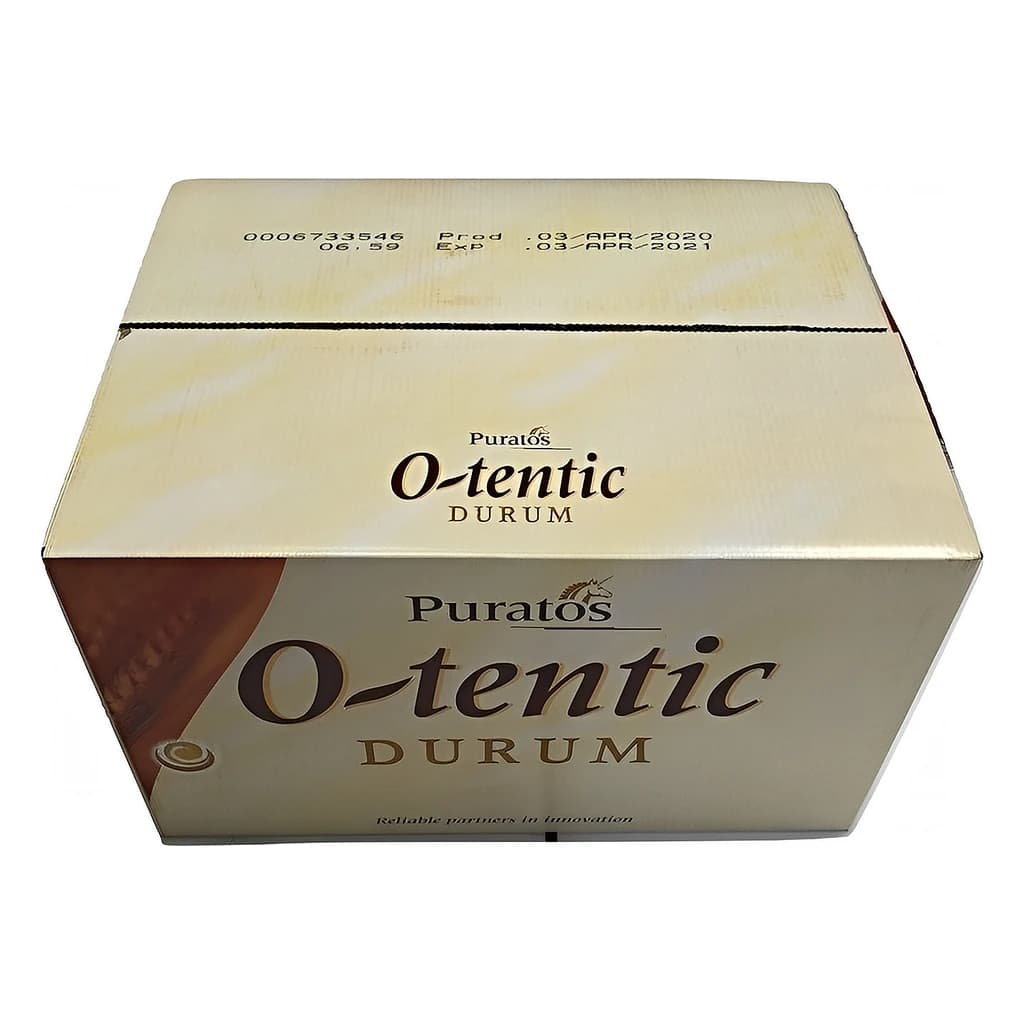
- Active dried sourdough — the closest thing to a live wheat maia in a bag. Puratos O-tentic Durum
is an active dried durum-wheat sourdough that also contains yeast, so it both sours and leavens:
dosed at 4% on flour with added water and salt, total acidity 45–65 ml/10 g, dry matter 94–100%,
with confirmed gassing power (card
formula-otentic-durum-application). It is a fast, consistent route to an authentic-tasting wheat loaf. Puratos Sapore Fidelio and Zeelandia Amore are wheat sourdoughs for flavour; Backaldrin BAS Weizen is a liquid wheat sour. - Sourdough acidifier — acidity without fermentation. IREKS Liquid Wheat Sour looks like a sour but is really an acidifying agent: its ingredients are water, lactic acid (E270), acetic acid (E260), malt extract (barley) and rye flour, dosed at 5%, pH 2.5–3.1, degree of acidity 185–210. It buys you standardised acidity and shelf life, not live lactic fermentation — use it knowing the difference.
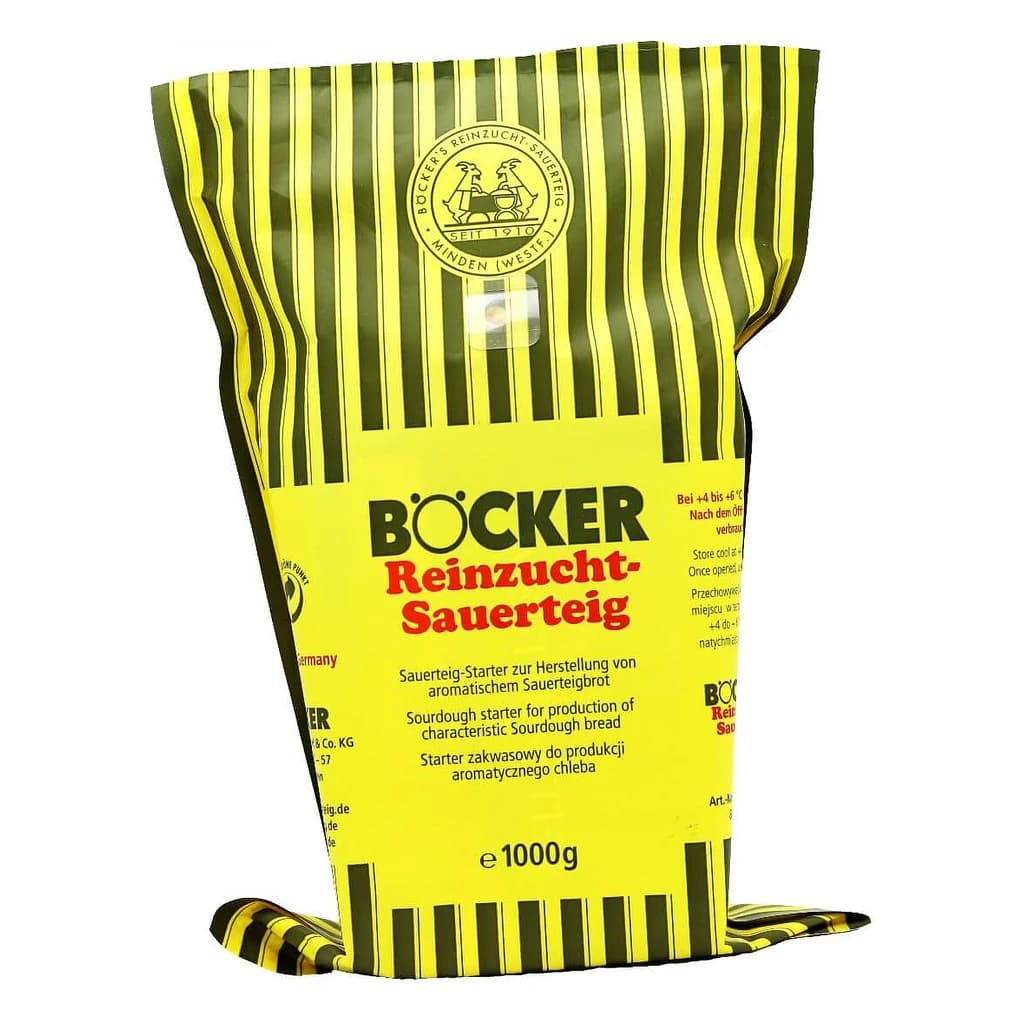
- Starter cultures — to seed or standardise your own maia. Lesaffre Saf-Levain LV1 / Livendo LV-2 and the Böcker Reinzucht-Sauerteig pure starter let you raise a fresh, reliable sour quickly.
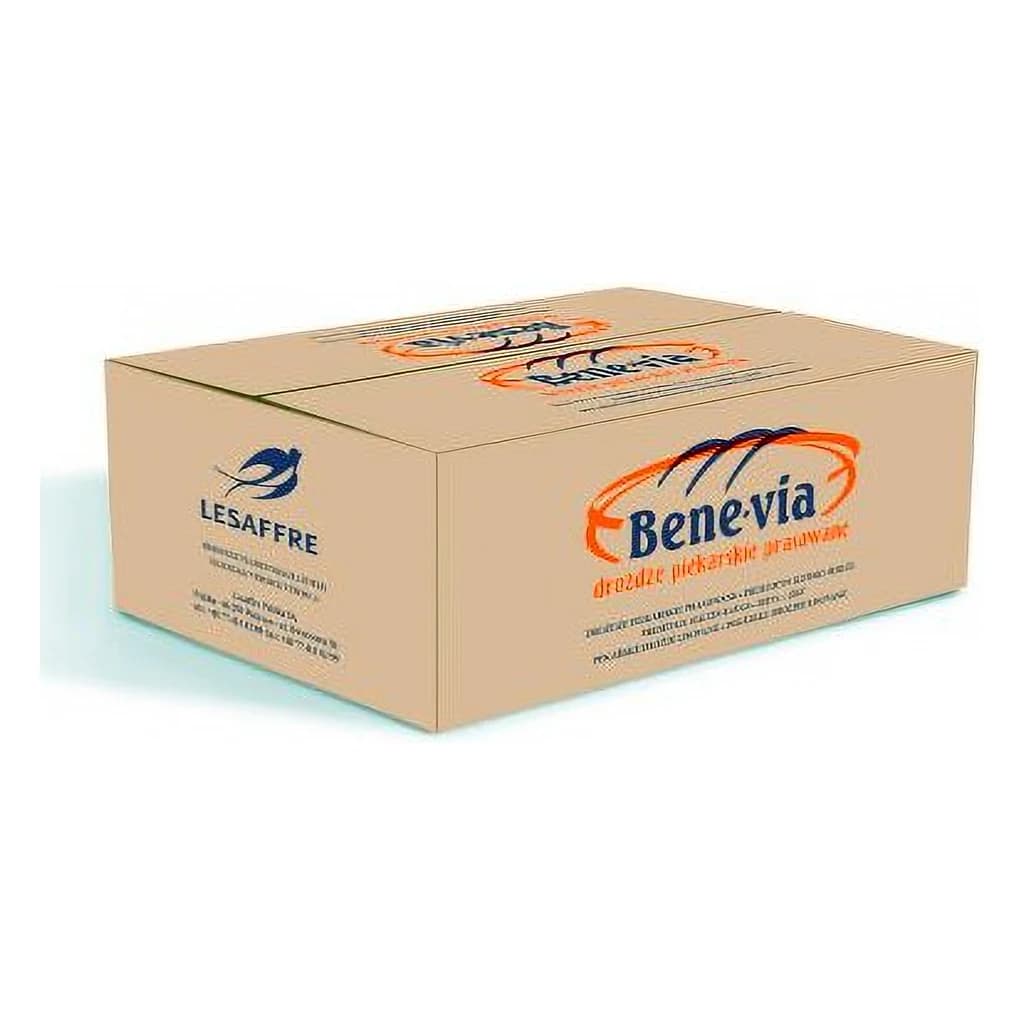
- Yeast for a hybrid dough. Lesaffre Benevia fresh yeast (drojdie) is living Saccharomyces cerevisiae, dry matter >29%, activity 125 ± 10 ml CO₂, stored at 1–10 °C (optimum 4 °C), 35-day shelf life — a measured dose gives extra lift on a busy day while the maia carries the flavour.
A sound approach for many bakeries is hybrid: run a real maia naturală for character, and use a measured dose of an active ready sourdough or fresh yeast to lock in consistency and lift.
10. Flour and yeast to buy (and how to feed a maia)
Build and feed the maia on a high-extraction flour, and bake mostly on strong wheat flour (table
table-flour-for-maia; and A1-key-quality-parameters for reading a spec):
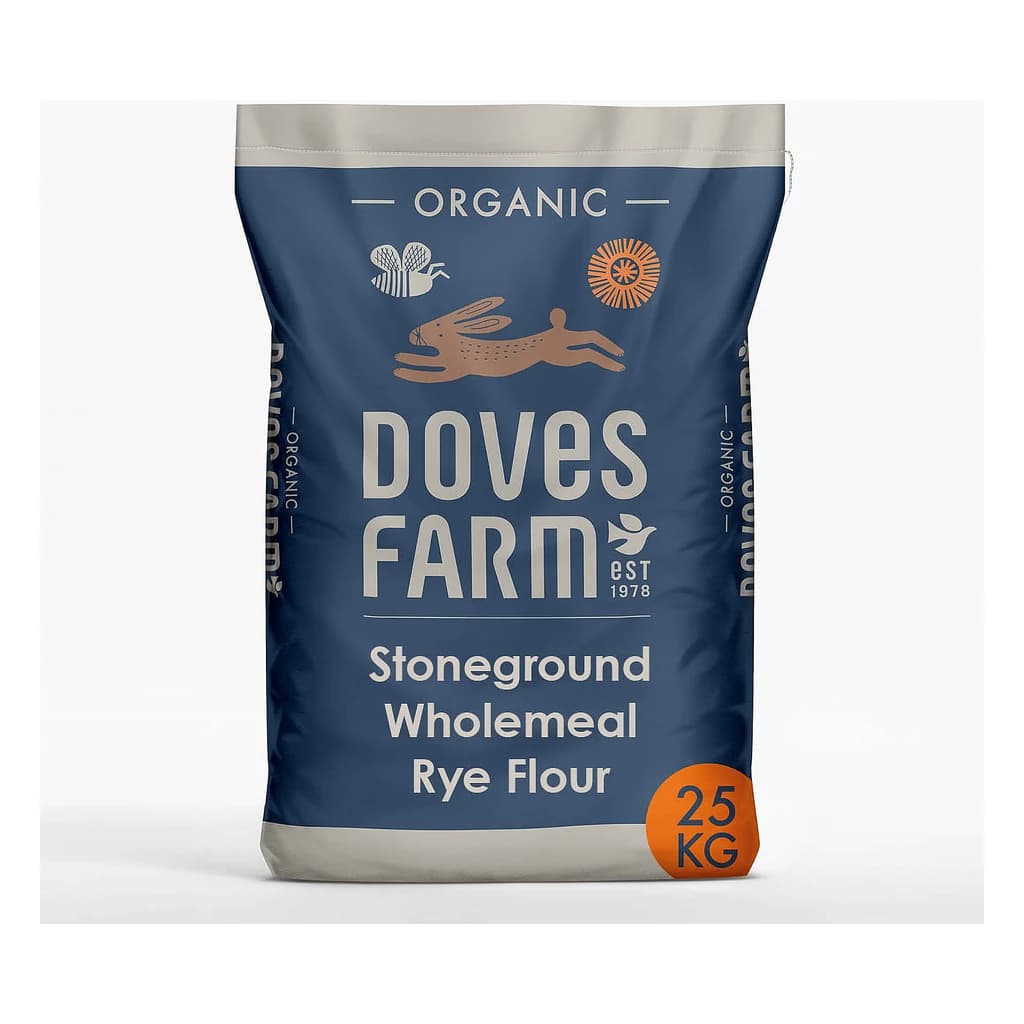
- Building / feeding: GoodMills Graham wholemeal wheat T1850, Doves Farm wholemeal rye, or GoodMills rye type 720 for a rye maia / pâine de secară.
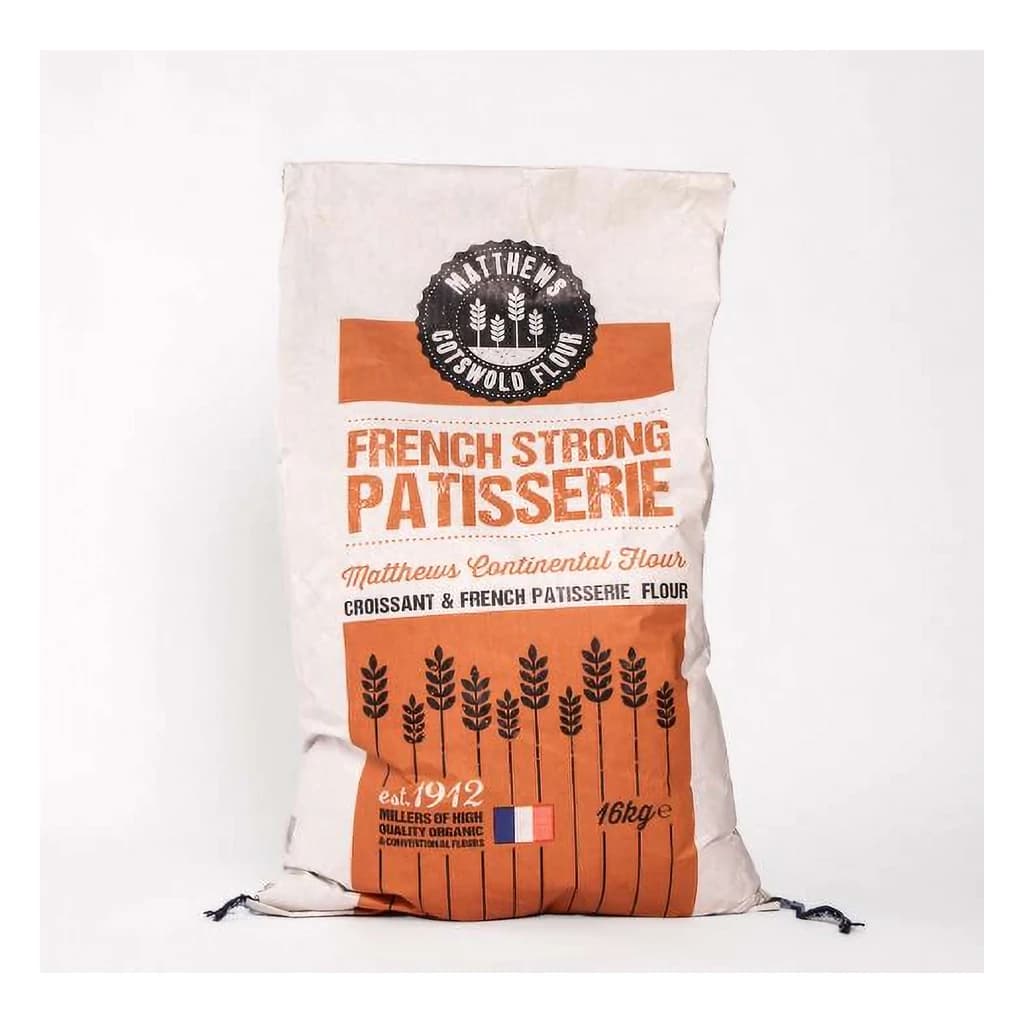
- Everyday bread (≈ Romanian Type 650): a strong white bakers flour such as Carr's Titan (protein 12.7–13.3%, water absorption 57–62%) or Matthews Belle Or T65 French flour.
- Colour and flavour: a little Dark Fermented Rye Malt (Malmon) in a rye or mixed loaf.
11. Faults and fixes
Full diagnostics are in data.json (fault-maia); the headlines:
- No life after 3–4 days → too cold, chlorinated water, or flour too white. Warm to 24–25 °C, use filtered/boiled water, switch to wholemeal or rye, allow up to 7–10 days.
- Putrid smell → too warm or neglected early; rebuild at 24–25 °C and refresh daily.
- Mould / pink film → discard the whole batch (do not scrape) and rebuild clean.
- Grey hooch on top → hungry maia; stir in or pour off and feed more often.
- Dense, flat, gummy bread → maia not at peak or dough under-proofed (it works slower than yeast); use the maia at peak, proof much longer, or add a touch of fresh yeast as a hybrid.
- Too sour → over-fermented / too acetic; ferment warmer and shorter to favour lactic, refresh more often, cut the maia fraction.
For crust, crumb and volume faults of the finished bread, cross-reference A5-bread-faults-causes-remedies.
12. Food safety and allergens (flagged for review)
- Allergen — gluten: wheat and rye maia, and every bread made from them, are cereals-containing-gluten and are not suitable for coeliacs or gluten-sensitive consumers. Puratos O-tentic Durum contains wheat gluten (its other ingredients are yeast, ascorbic acid E300 and enzymes), carries mustard cross-contamination, and per its spec is made on equipment that also handles a product containing the sensitising colour tartrazine (E102); it is vegan-suitable but not for coeliacs. Carr's Titan flour is wheat and carries cross-contamination risk for rye/barley/oats (shared packing) and soya (supply chain).
- Allergen — ready sours: IREKS Liquid Wheat Sour contains barley malt and rye (gluten) and may carry traces of egg, soya, milk, mustard, sesame and lupin — always read the current spec sheet of the exact product.
- Allergen — fresh yeast: Lesaffre Benevia declares no allergens, though its spec notes that sulphites are present in the molasses used in its production (below the labelling threshold).
- Spoilage / safety upside: a live maia's acidity is a genuine safety control. Adequate fermentation raises acidity, extends shelf life and helps suppress mould and rope (boala mezentericus), the sticky, stringy spoilage that plagues under-acidified summer loaves; the industrial alternative is chemical preservatives (acetates, propionates, sorbates). Keep the acidity up.
These food-safety and allergen statements are flagged for human review before publication.
Buy the ingredients (Domson catalogue)
- Active / ready wheat sourdough: Puratos O-tentic Durum, Sapore Fidelio, Sapore Rigoletto, Zeelandia Amore, Backaldrin BAS Weizen.
- Rye sour (for pâine de secară): IREKS Natural Liquid Rye Sour.
- Sourdough acidifier: IREKS Liquid Wheat Sour (added acids — acidity, not live fermentation).
- Starter cultures: Lesaffre Saf-Levain LV1 / Livendo LV-2, Böcker Reinzucht pure starter.
- Yeast (drojdie): Lesaffre Benevia fresh yeast.
- Flour: Carr's Titan strong white / Matthews Belle Or T65 for bread; GoodMills Graham wholemeal T1850, Doves Farm wholemeal rye, GoodMills rye T720 for building the maia; Malmon Dark Fermented Rye Malt for colour and flavour.
Full ids are in this dossier's frontmatter (linked_products / linked_brands).
Building a maia naturala from scratch (7-10 day spontaneous build)
A wild wheat/rye sourdough from flour and water only. Use a high-extraction flour and non-chlorinated water. Rye speeds it up, wholemeal wheat stabilises it, white flour slows it. Below ~24 C expect the longer end of the range.
| Ingredient | Baker's % | Weight |
|---|---|---|
| Faina integrala (or secara) per feed | ||
| Water 20-30 C per feed |
- Day 1: mix 100 g wholemeal (or rye) flour + ~100-150 g water at room temperature to lukewarm (~20-30 C; the cited recipe uses water neither too hot nor too cold) to a thick batter; cover loosely (never sealed); hold at 24-25 C. Days 2-10: each day discard part and refresh with 100 g flour + 100 g water. It is ready when it doubles in about 4-6 h, is full of bubbles and smells pleasantly sour like yogurt; the commonly used float test is one convenient (if imperfect) extra sign. Keep on the counter with a 12-24 h feed, or refrigerate and feed and wake it a day before baking.
Yield: ~150-200 g active maia (mother)
The old way: preserving and reviving a maia as dried cakes (turtite)
Before refrigerators, the maia was kneaded stiff with flour, shaped into small cakes (turtite) and dried to carry it between bakes. This revives a dried turtita into an active leaven.
| Ingredient | Baker's % | Weight |
|---|---|---|
| Dried turtite (dried maia cakes) | ||
| Warm water | ||
| Faina integrala (for the paste) |
- Weigh ~100 g dried turtite per 1 kg of the day's flour. Pour a mug of warm water over them and leave several hours until softened. Mix in a cup of flour to a thick, sour-cream-consistency paste (consistenta smantanii). Cover with cloth, dust with flour, and leave to ferment (dospit) ~12 h at room temperature before using it as the leaven in the final dough.
Yield: leaven for ~1 kg flour
Traditional paine de casa on maia naturala (wheat, baker's %)
A practical white/semi-white Romanian country loaf leavened only with a mature maia. Percentages are on total flour. The maia works far slower than yeast, so give it a long bulk and proof; bake hot in a wood-fired oven or hot home oven. Salt is added to the final dough, never to the maia.
| Ingredient | Baker's % | Weight |
|---|---|---|
| Bread wheat flour (Type 650 / strong white) | ||
| Wholemeal wheat flour | ||
| Mature maia naturala (100% hydration) | ||
| Water (to ~68-72% total hydration by flour strength) | ||
| Salt (final dough only) |
- Mix flour and water and autolyse 20-30 min. Add the maia and salt; knead (traditionally in a covata) to a smooth, elastic dough. Bulk ferment until well risen (judge by volume and dome, not the clock - much longer than a yeasted dough). Shape, then final proof. Bake: a peasant wood-fired oven is loaded very hot (a well-fired wood oven commonly exceeds 300 C; general wood-oven practice); a standard home-oven schedule is ~230 C with steam for 10-15 min, then reduce to ~200 C to finish (the sourced Romanian hearth-oven figure is 240-280 C). Cool fully before cutting.
Industrial two-phase (bifazic) white bread on a fluid yeasted maia
The volume-bakery route: a fermented fluid maia carries all the yeast, then the final dough is built on it. Parameters from Romanian bakery technology (TUIASI). This is the yeasted maia sense of the word, not a wild sourdough.
| Ingredient | Baker's % | Weight |
|---|---|---|
| Wheat flour (total) | ||
| of which fermented in the maia fluida | ||
| Fresh yeast (all of it into the maia) | ||
| Water (80-82% of it into the maia) | ||
| Salt (final dough) |
- Prepare the maia fluida: disperse all the yeast in warm water (30-35 C), add 30-40% of the flour to 65-75% moisture with 0.7-1.0% salt, ferment 3-4 h at 27-29 C. Mix the maia/sponge (6-10 min), then knead the final dough on it (8-20 min by flour strength). Divide, shape, final proof 20-90 min at 30-35 C and 70-80% RH. Bake 240-280 C; time by weight (10 min rolls to ~65 min for a 2 kg loaf).
Authentic wheat bread with Puratos O-tentic Durum (first-party dosage)
Supplier dosage from the O-tentic Durum spec sheet - an active dried durum-wheat sourdough that also contains yeast, so it both sours and leavens. A fast, consistent route to an authentic-tasting wheat loaf without running a live maia.
| Ingredient | Baker's % | Weight |
|---|---|---|
| Wheat flour | ||
| Puratos O-tentic Durum | ||
| Water | ||
| Salt |
- Use O-tentic Durum at 4% on flour weight with the addition of water and salt (no separate sourdough or, per its gassing power, no separate yeast needed for a standard loaf). Mix, bulk, shape, proof and bake as for a standard wheat bread. Store the product dry at 16-20 C; once opened, sealed at 0-7 C up to one week. Vegan-suitable; contains gluten, not for coeliacs.
The single word maia (folk synonym: plamadeala) covers two different things. Knowing which one a recipe or a colleague means avoids confusion. In the artisan/home sense it is a wild sourdough; in industrial bakery technology it is a yeasted fermented sponge that is the first phase of the indirect method.
| Sense | What it is | Leavening | Built over | Typical use | Source |
|---|---|---|---|---|---|
| Maia naturala (artisan) | Wild sourdough of flour + water only | Wild yeast + lactic acid bacteria from the grain | 7-10 days from scratch, then fed indefinitely | Sourdough bread, prescura, rustic paine de casa | src-b4m-01, src-b4m-02 |
| Maia (industrial technology) | Fermented sponge of flour, water and ALL the yeast | Baker's yeast (drojdie), with some lactic acid from the flour | 3-4 h (fluid) or 90-180 min (stiff) | First phase of the two-phase (bifazic) method for volume bread | src-380 |
How Romanian bakery technology classifies dough-making. The two-phase (bifazic) method built on a yeasted maia is the workhorse; the three-phase (trifazic) method adds a prospatura stage for weaker or higher-extraction flours. An artisan maia-naturala bread is a long, indirect ferment of the same logic run on wild culture instead of yeast.
| Method (RO) | Phases | Best for | Trade-off | Source |
|---|---|---|---|---|
| Monofazic / direct | All ingredients mixed at once | Speed, simple products | Weak taste/aroma, crumbly crumb (miez sfaramicios), stales fast, high yeast use | src-380 |
| Bifazic (two-phase) | maia (flour + water + all yeast) then aluat (final dough) | Good-quality flours, most everyday bread | Needs a fermented sponge stage; most widely used in practice | src-380 |
| Trifazic (three-phase) | prospatura then maia then aluat | High-extraction, weak or degraded flours | Longest, most labour | src-380 |
| Maia naturala (artisan indirect) | refresh the mother then long bulk + proof | Flavour, keeping quality, digestibility, ritual bread | Slow; the maia works far slower than yeast | src-b4m-01, src-b4m-08 |
First-phase maia parameters from Romanian bakery technology (TUIASI). These are the yeasted-sponge sense of maia, not the wild sourdough. Percentages are on the flour and water of the whole formula. Note salt goes into a fluid maia at a low level to steady it; a wild maia naturala carries no salt.
| Parameter | Maia fluida (fluid) | Maia consistenta (stiff) | Source |
|---|---|---|---|
| Moisture (umiditate) | 65-75% | 41-45% | src-380 |
| Share of the water | 80-82% | not specified | src-380 |
| Share of the flour | 30-40% | 30-60% | src-380 |
| Salt | 0.7-1.0% | not specified | src-380 |
| Fermentation time | 3-4 h | 90-180 min | src-380 |
| Fermentation temperature | 27-29 C | 25-29 C | src-380 |
First-party spec data. A Romanian baker in the UK can back up or replace a live maia with these. Crucial distinction: an ACTIVE sourdough (O-tentic Durum) can leaven bread; a stabilised ready sour buys flavour/acidity; an ACIDIFIER (added acids) buys only acidity and shelf life, not live fermentation. Acidity figures are the product as supplied on the supplier method, not finished-bread acidity.
| Product | Type | Key spec | Dosage on flour | Notes | Source |
|---|---|---|---|---|---|
| Puratos O-tentic Durum | Active dried durum-wheat sourdough + yeast | Total acidity 45-65 ml/10 g; dry matter 94-100%; gassing power conform | 4% + water + salt | Leavens on its own; Mediterranean-style authentic wheat bread; vegan; not for coeliacs | ss-otentic-durum |
| Puratos Sapore Fidelio | Wheat sourdough | see current spec | per supplier | Wheat sourdough for flavour in wheat breads | src-381 |
| IREKS Liquid Wheat Sour | Liquid acidifier (added acids) | pH 2.5-3.1; degree of acidity 185-210 | 5% | Water + lactic (E270)/acetic (E260) acid + malt extract (barley) + rye flour; NOT a live sour | ss-ireks-wheatsour |
| Lesaffre Saf-Levain LV1 / Livendo LV-2 | Starter culture | live/devitalised culture | per supplier | Seed or standardise your own maia | src-385 |
| Böcker Reinzucht-Sauerteig | Pure starter culture | live culture, 1 kg | small inoculation | Traditional pure-culture starter to raise a fresh sour | src-385 |
| Lesaffre Benevia fresh yeast | Fresh baker's yeast (drojdie) | Dry matter >29%; activity 125 +/- 10 ml CO2 | 1.5-4% typical | For a hybrid maia + yeast dough or extra lift | ss-benevia |
Romania is wheat country, so a maia is usually a wheat maia. Build and feed on a high-extraction flour (more of the grain's microflora and minerals); bake mostly on strong/bread wheat flour. Romanian flour types run by ash: 000 (very white, ~480), 550, 650 (standard bread), 1250, integrala (wholemeal). Approximate equivalents shown for the catalogue.
| Role | Romanian type | Approx. catalogue equivalent | First-party spec | Source |
|---|---|---|---|---|
| Building / feeding the maia | faina integrala / secara | GoodMills Graham wholemeal T1850; Doves Farm wholemeal rye; GoodMills rye T720 | - | src-b4m-01, ss-carrs-titan |
| Everyday bread flour | Type 650 | French T65 (Belle Or); UK strong white bakers flour | Protein 12.7-13.3%, water absorption 57-62% (Carr's Titan) | ss-carrs-titan, src-224 |
| Fine white / festive | Type 000 / 480 | very white low-ash wheat flour | - | src-224 |
| Rye maia / paine de secara | secara | GoodMills rye T720; Doves Farm wholemeal rye | - | src-b4m-01 |
| Symptom | Likely cause | Remedy | Source |
|---|---|---|---|
| No life / no bubbles after 3-4 days | Too cold (<20 C); chlorinated water; flour too white | Move to 24-25 C; use filtered/boiled-cooled water; switch to wholemeal or rye; allow up to 7-10 days | src-b4m-01, src-b4m-02 |
| Smells putrid/unpleasant rather than sour | Too warm or neglected early on; wrong microbes dominated | Rebuild at 24-25 C; refresh daily; it should settle to a yogurt-like sour by ~day 7 | src-b4m-02 |
| Pink/orange or fuzzy mould on top | Contamination; left too long unfed | Discard the whole batch (do not scrape); rebuild clean | src-b4m-01 |
| Grey liquid on top (hooch) | Hungry maia - overdue a feed | Stir in or pour off, then refresh; feed more often or refrigerate between bakes | src-b4m-01 |
| Maia sluggish, will not double | Under-fed, too cold, or freshly out of the fridge | Feed 1:1 and hold at 24-25 C; wake with a feed or two before baking; use the float test | src-b4m-01 |
| Bread dense, flat, gummy | Maia not at peak / under-proofed (maia works slower than yeast) | Use maia at peak activity; give a much longer bulk and proof; add a touch of fresh yeast (drojdie) as a hybrid if needed | src-b4m-08, src-380 |
| Bread too sour | Over-fermented / too much acetic acid (cool, slow) | Ferment a little warmer and shorter to favour lactic over acetic; refresh the maia more often; cut the maia fraction | src-380 |
| Rope / stringy, sticky crumb in storage (boala mezentericus) | Bacillus spoilage, worst in warm months and under-acidified dough | Keep acidity up (live maia / adequate fermentation); the industrial control is preservatives (acetates, propionates, sorbates) | src-380 |
Buy the ingredients
Catalogue products and brands referenced in this article.
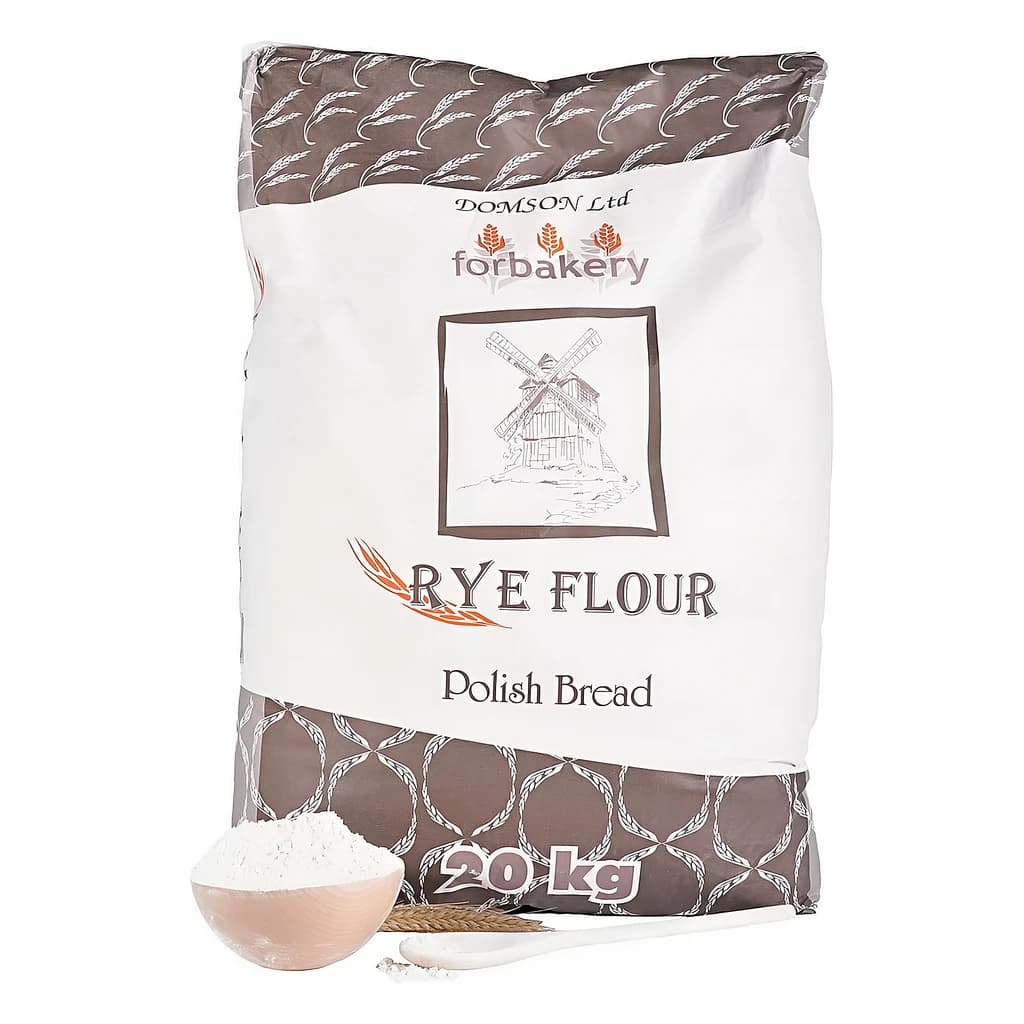
Rye Flour Type 720 20 kg
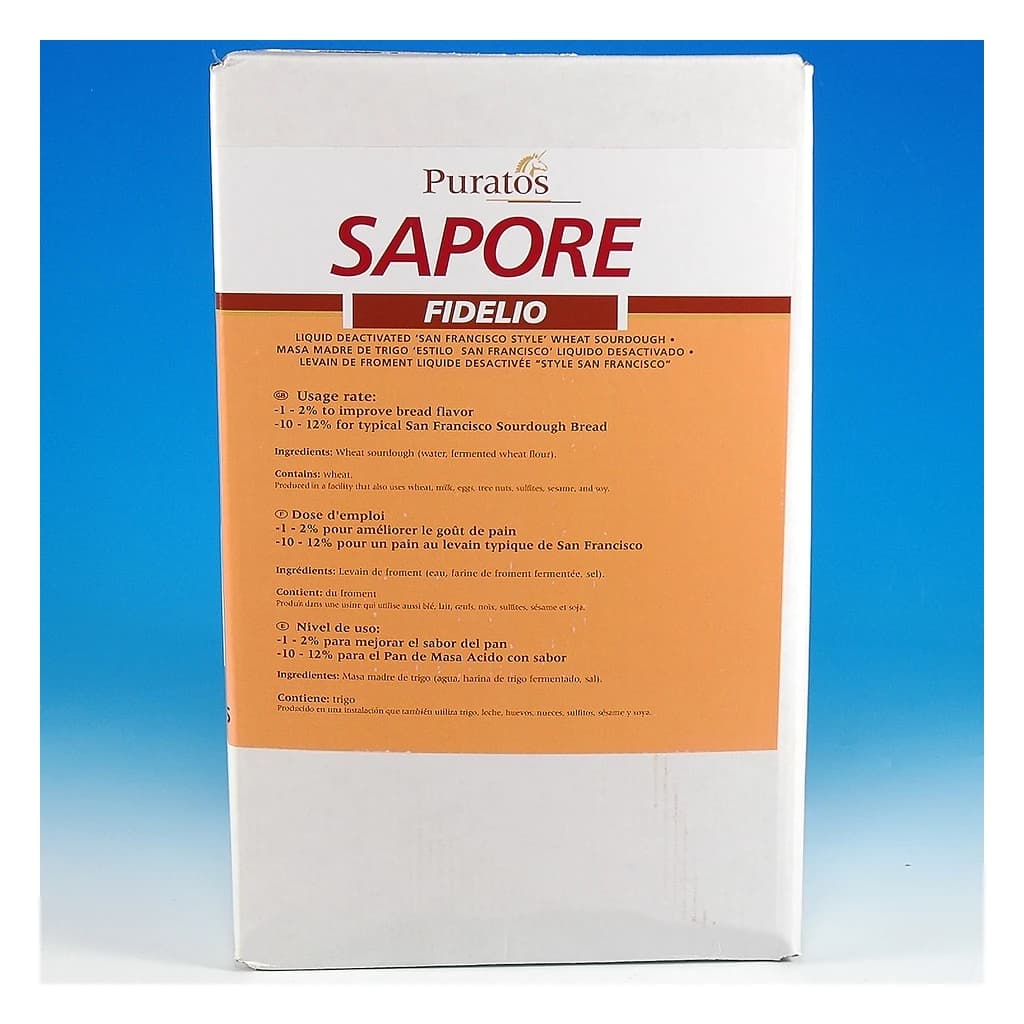
Puratos Sapore Fidelio Sourdough 10 kg
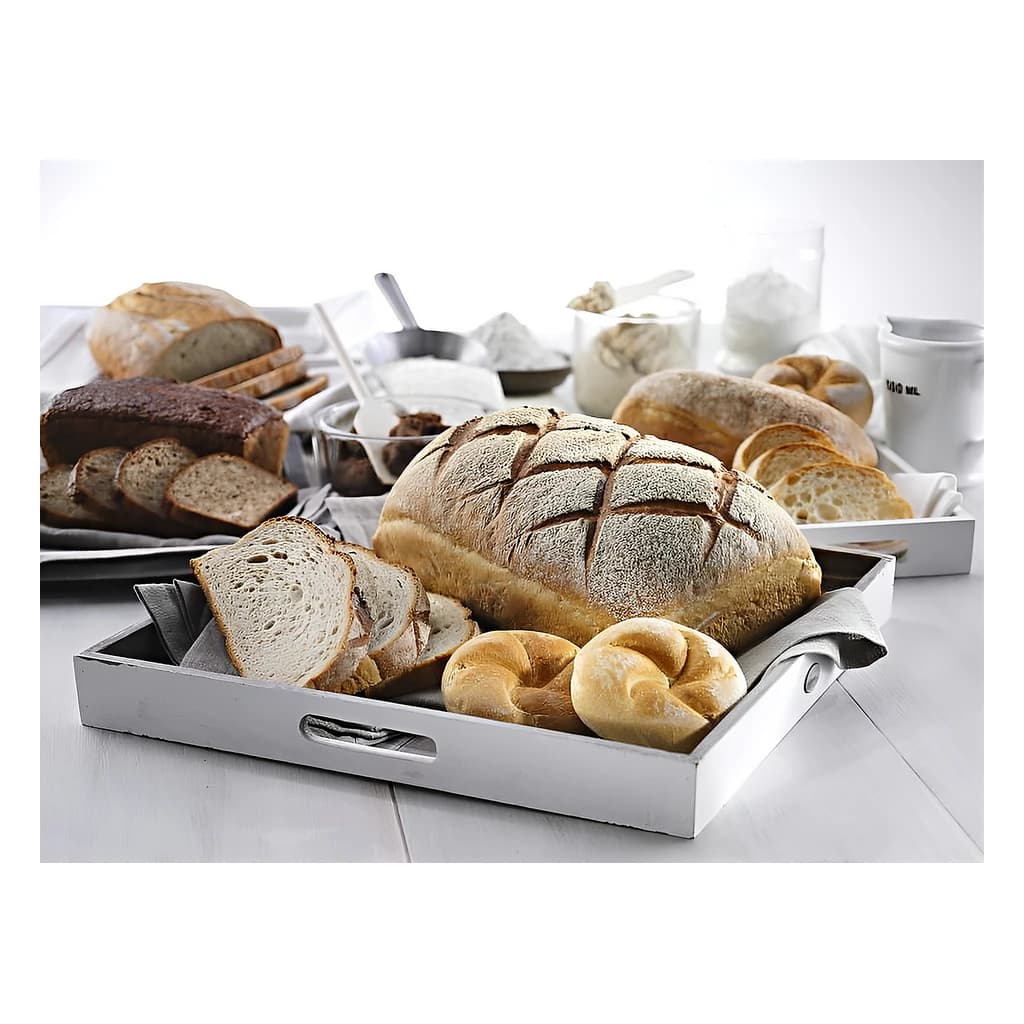
Zeelandia Amore Wheat Sourdough 13 kg
Fresh Yeast Benevia 10 kg
Böcker Reinzucht-Sauerteig Pure Sourdough Starter 1 kg
Dark Fermented Rye Malt 25 kg
Lesaffre Saf-Levain LV1 Sourdough Starter (S)
Lesaffre Livendo Starter LV-2 Sourdough Culture
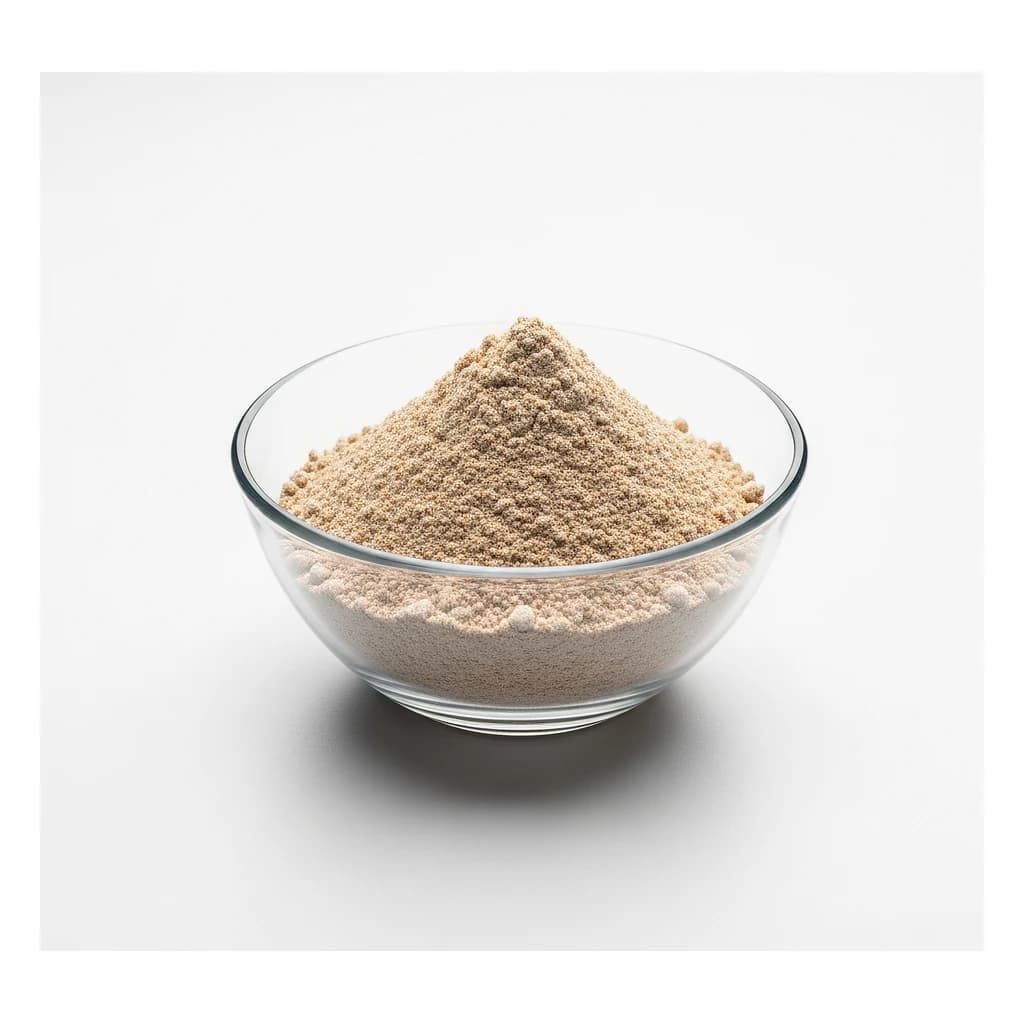
Graham Wheat Flour Type 1850 40 kg
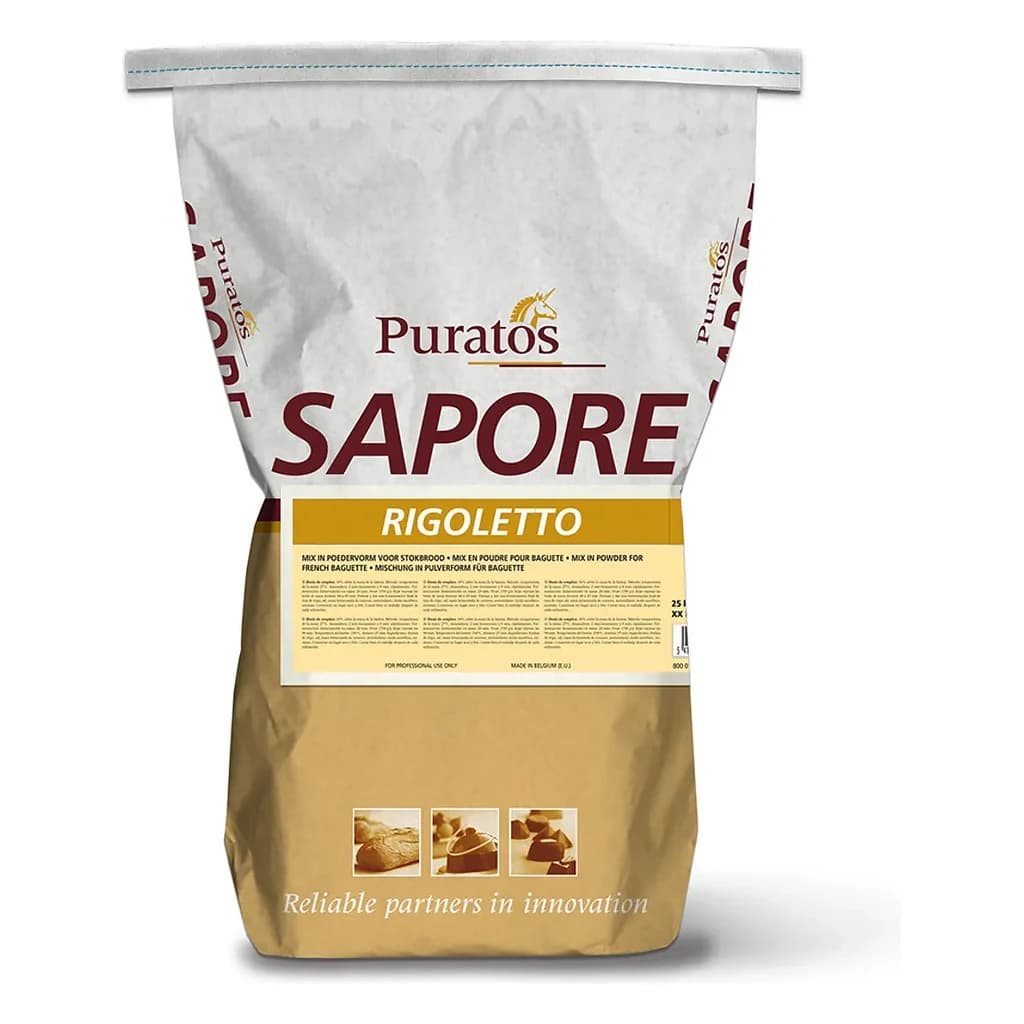
Puratos Sapore Rigoletto Sourdough Powder 25 kg
IREKS Natural Liquid Rye Sour 12.5 kg
IREKS Liquid Wheat Sour 12.5 kg
Belle Or T65 French Flour 25 kg
Puratos O-tentic Durum Sourdough Concentrate 10 × 1 kg
Organic Stoneground Wholemeal Rye Flour 25 kg
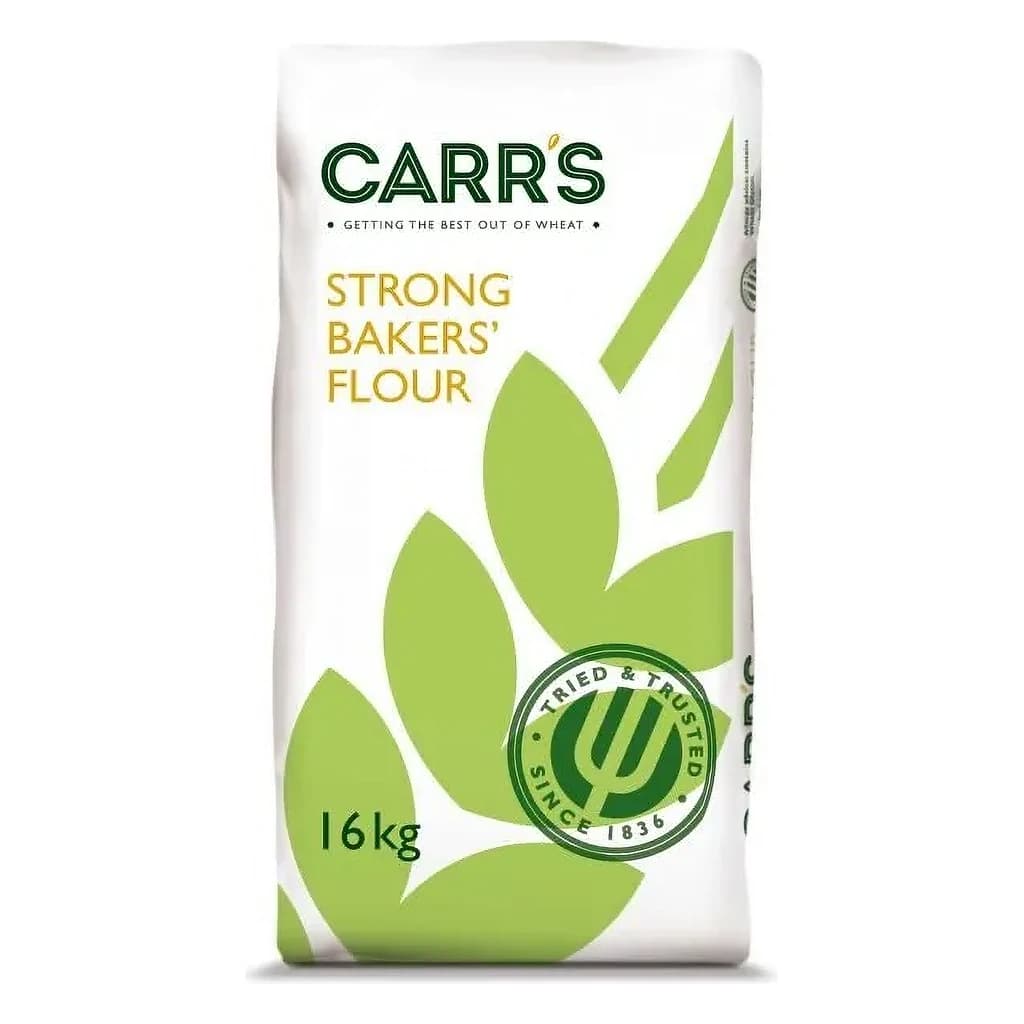
Titan Strong Bakers Flour 16 kg
Related reading
- Sourdough Starter Cultures: Microbiology, Maintenance, Types & What Goes Wrong
- Rye Sourdough Fermentation: One-Stage, Two-Stage & Three-Stage Methods Explained
- Sourdough technology: starter maintenance, LAB–yeast synergy, acidification curves and rye vs. wheat sourdoughs
- The baking stage: oven spring, steam injection, starch gelatinisation, Maillard reaction and crust formation
- Romania's regional bread map: from Transylvanian pâine bătută to Oltenian pâine la țest
- Romanian flour types decoded: Type 480, 000, 550, 650, 800, 1250 and whole-grain — ash, protein and choosing for each application
- Pască, colaci and ritual breads: the Orthodox liturgical calendar's baking demands
- Preferments in Practice: Poolish, Biga, Sponge & Pâte Fermentée — When and How to Use Them
- Fresh, Active Dry & Instant Yeast: Formats, Performance & When to Use Each
- Bulk fermentation in depth: yeast activity, enzymatic reactions, gluten development and dough temperature control
- Bread faults, causes and remedies: a systematic diagnostic guide for volume, crust, crumb and flavour defects
- Flour type numbers decoded: Polish T-codes, French T45–T150, German 550, Italian 00
- Reading the flour spec sheet: ash content, Hagberg falling number, Zeleny, farinograph and alveograph
- Cozonac: mastering Romania's festive enriched bread — dough formula, gluten development and regional fillings
Sources
- academicUtilaje pentru morarit si panificatie (curs universitar) - Conf. univ. dr. ing. Ioan Baisan (ro)
- brandLesaffre Romania - producator de drojdie, maia, amelioratori si premixuri (ro)
- brandBakery School - singura scoala in sistem dual din Romania pentru brutari si cofetari (Puratos) (ro)
- referencePaine la test - Secretele bucatariei romanesti (ro)
- referenceTop 5 produse de panificatie din Transilvania (Top 5 Transylvanian bakery products) (ro)
- referenceBucate, vinuri si obiceiuri romanesti - Radu Anton Roman (Editura Paideia) (ro)
- recipeMaia naturala - reteta culinara cu ingrediente bio (ro)
- recipeCum prepari maia naturala: reteta pas cu pas (ro)
- recipeDrojdie de hamei - cum sa faci drojdie de casa (homemade hop yeast) (ro)
- recipeBors de putina - cum se umple, reteta de bors cu huste (ro)
- referenceDe ce folosim paine dospita la Liturghie si nu azima? (ro)
- referenceCe este prescura? (ro)
- referenceCum trebuie sa fie prescura pentru Sfanta Liturghie? (ro)
- referencePainea de casa, gustul copilariei de la tara (ro)
- referencePaine rustica traditionala preparata cu maia din turtite (ro)
- referenceFaina si standardele de calitate ale produselor de panificatie (ro)
- spec-sheetPuratos O-tentic Durum Sourdough Concentrate - Technical Data Sheet
- spec-sheetIREKS Liquid Wheat Sour (Plynny Zakwas 120506) - Quality Certificate
- spec-sheetLesaffre Fresh Yeast Benevia - Product Specification (bilingual PL/EN)
- spec-sheetCarr's Strong Bakers Flour (Titan) - Raw Material Specification